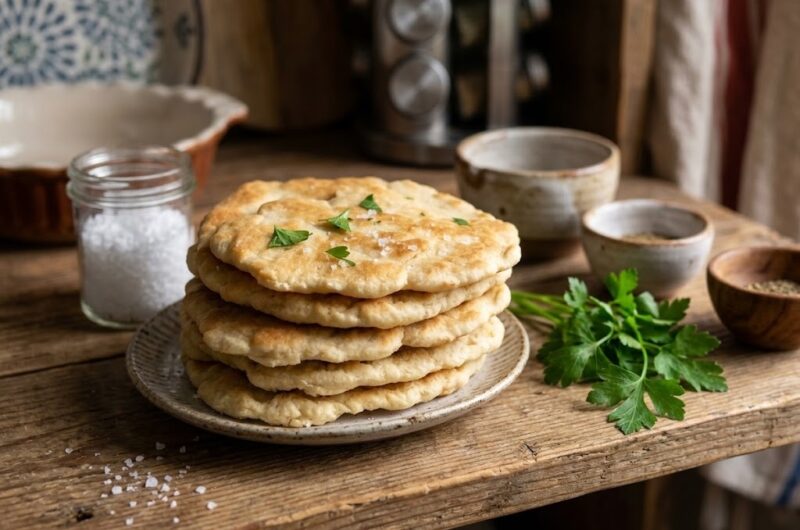
This keto flatbread recipe is a simple way to enjoy soft, buttery homemade flatbread while keeping carbohydrates low. Made with almond flour, coconut flour, xanthan gum, eggs, and a few basic ingredients, it creates a satisfying bread alternative for people following a keto or low-carb eating plan. The finished flatbread is pan-fried, lightly browned, and brushed with melted butter while still hot.
Many low-carb recipes try to copy the texture of traditional bread, but this gluten-free keto flatbread uses a simple dough that is easy to shape and cook in a skillet. The combination of almond flour and coconut flour gives the dough structure, while xanthan gum helps hold everything together. Each flatbread develops browned areas during frying, giving it a rustic appearance and a pleasant cooked flavor.
This easy keto bread recipe does not require yeast, rising time, or an oven. The dough comes together quickly, making it useful when you want a warm low-carb side without spending much time in the kitchen. With only 5 minutes of preparation and 2 minutes of cooking, the full recipe is ready in 7 minutes. It can be served with meals or enjoyed as a simple buttery snack.
What Makes This Keto Flatbread Different?
Traditional naan and flatbread usually contain wheat flour, which makes them unsuitable for a gluten-free or very low-carb diet. This keto flatbread replaces regular flour with almond flour and coconut flour. These ingredients help create a dough without using wheat, while the remaining ingredients provide moisture, structure, and flavor.
The recipe also uses xanthan gum, an important ingredient for the texture of the dough. Since gluten is not present, the xanthan gum helps give the mixture flexibility and allows the dough to stay together during shaping and frying. Without it, the dough may be more difficult to handle and could break apart when transferred to the skillet.
The flatbread is fried instead of baked. Cooking it in a hot skillet gives each piece direct contact with the pan, helping browned and slightly charred areas form on the surface. These marks give the finished bread a more traditional flatbread appearance. Brushing the bread with melted butter immediately after cooking adds moisture and a rich finish.
Understanding the Almond Flour and Coconut Flour Combination
Almond flour is the main flour used in this keto flatbread recipe. It provides most of the volume and gives the dough a mild, nutty flavor. Almond flour is commonly used in low-carb baking because it contains fewer carbohydrates than regular wheat flour. It also works well with the rich ingredients used in this recipe.
Coconut flour is included in a much smaller amount because it absorbs a significant amount of moisture. Just 2 tablespoons are enough to help balance the dough. When combined with almond flour, it helps create a mixture that can be pressed and shaped without becoming overly wet. It also contributes to the overall structure of the finished flatbread.
Because these two flours behave differently from wheat flour, the dough should not be expected to look exactly like regular bread dough. It may feel softer or slightly more delicate. Working the dough after adding the water gives the flours and xanthan gum time to absorb moisture, which makes shaping easier.
Why Xanthan Gum Is Important in Low-Carb Flatbread
Xanthan gum plays an important role in gluten-free keto baking. Traditional wheat flour contains gluten, which helps dough stretch and hold together. This recipe does not use wheat flour, so xanthan gum helps provide some of the binding quality that would otherwise be missing. It supports the dough as it is divided, pressed, and moved to the skillet.
Only 2 teaspoons are used, but the ingredient has a noticeable effect on how the dough handles. Whisking it thoroughly with the dry ingredients is important because this helps distribute it evenly through both flours. An unevenly mixed dough may have areas with a different texture, making it harder to press into consistent flatbread portions.
After the eggs and water are added, working the dough allows the xanthan gum to absorb moisture. This step should not be rushed. Give the mixture enough time to come together before dividing it into portions. The dough does not need to be perfectly smooth, but it should be combined well enough to form four separate pieces.
Mixing the Keto Flatbread Dough
Begin by whisking the almond flour, coconut flour, xanthan gum, baking powder, and Falk Salt together. Mixing the dry ingredients first helps spread the baking powder and xanthan gum evenly throughout the flour mixture. This creates a more consistent dough once the wet ingredients are added.
Next, add the whole egg and the egg white. Beat them gently into the flour mixture until the ingredients begin to combine. At this point, the mixture should start changing from a loose flour blend into a dough. The eggs add moisture and help bind the ingredients while also contributing to the final texture.
Add the tablespoon of water and begin working the dough. This gives the flours and xanthan gum the moisture they need to absorb. Continue bringing the mixture together until a workable dough forms. Avoid adding extra ingredients, as the recipe is designed around the exact amounts listed.
How to Shape the Low-Carb Flatbread
Once the dough is ready, divide it into four equal portions. Making similarly sized pieces helps each flatbread cook at about the same rate. The original recipe also allows the dough to be divided into five smaller balls if you prefer a smaller portion. For the standard yield, however, four portions create four servings.
Press each portion out using cling wrap. The dough does not need to be shaped into a perfect circle. A homemade keto flatbread can have slightly uneven edges, and those natural variations do not affect the final flavor. Focus on pressing the dough into an even thickness so it cooks consistently in the skillet.
The surface of the dough can also be gently dimpled before cooking. These small imperfections and raised sections can brown differently when they meet the hot skillet. The result is a more rustic appearance with varied browned areas. Smooth the dough as much as needed for handling, then allow some dimples and texture to remain.
Why the Shape Does Not Need to Be Perfect
A common concern when making homemade flatbread is achieving a perfectly round shape. That is not necessary for this recipe. Low-carb dough made with almond flour and coconut flour behaves differently from traditional wheat dough, so trying to make every edge completely even can make the process more difficult.
Instead, concentrate on making each piece thin enough to cook quickly while keeping the thickness fairly consistent. A flatbread with an uneven edge can still fry properly and taste just as good. The natural shape can also give the finished bread a more homemade appearance.
Small dimples are especially useful for creating variation across the surface. Some areas remain slightly raised while others have more direct contact with the hot skillet. This can lead to different browned spots across the bread. Those marks are part of what gives skillet-cooked keto flatbread its familiar appearance.
Frying Keto Flatbread in a Skillet
Heat a large skillet over medium heat and add the tablespoon of oil for frying. Medium heat is important because the flatbread cooks very quickly. If the skillet is too hot, the outside may brown before the center has had enough time to cook. A properly heated pan helps create an even result.
Place one shaped piece of dough into the skillet and fry it for about 1 minute on the first side. The surface should begin to brown in places as it cooks. Carefully turn the flatbread over and fry the second side for about another minute.
Repeat the process with the remaining portions of dough. Keep an eye on the heat as you work because skillet temperature can change between batches. The total cooking time is only 2 minutes per flatbread according to the original method, so the bread should not be left unattended while frying.
Adding Butter After Cooking
Once each flatbread has finished frying, brush it with melted butter while it is still hot. The warmth of the bread helps the butter spread easily over the surface. This step adds a buttery flavor and helps keep the finished flatbread from feeling dry.
The ingredients also include Falk Salt, and the cooked bread may be garnished with additional salt and chopped parsley as directed. This gives the finished flatbread a simple savory finish. The parsley is used as a garnish rather than being mixed into the dough.
Serve the flatbread while it is warm for the best texture. The outside will have cooked and browned areas from the skillet, while the inside remains soft. Because the recipe cooks so quickly, it is best enjoyed soon after frying.
Is This Keto Flatbread Gluten-Free?
This recipe uses almond flour and coconut flour instead of wheat flour, so the listed recipe is designed as a gluten-free keto flatbread. It also does not contain regular flour or another wheat-based ingredient. This makes it a useful bread alternative for people avoiding gluten while also following a low-carb eating style.
When preparing food for someone with a strict gluten-free requirement, check the labels of every packaged ingredient. Products such as baking powder, xanthan gum, and other processed items can vary by brand. Using ingredients that meet your individual dietary requirements is important.
The recipe is categorized here as Keto Recipes because its main purpose is to provide a low-carb bread alternative. Almond flour and coconut flour replace traditional high-carbohydrate flour, and the nutritional information lists only 4 grams of net carbohydrates per serving.
Storage and Reheating
This flatbread is best served shortly after it is cooked, when the surface is warm and the butter has just been brushed on. If you have leftover flatbread, allow it to cool before storing it. Keep it in a suitable airtight container to help protect its texture.
When reheating, use gentle heat so the flatbread warms without becoming overly dry. A skillet can be useful for bringing back some of the cooked surface texture. Heat the bread briefly and watch it closely because the pieces are thin and can warm quickly.
If you are preparing several servings, you can cook each piece one after another and serve them together. The recipe takes only 7 minutes in total, including 5 minutes of preparation and 2 minutes of cooking, making it easy to prepare fresh when needed.
Common Handling Questions
If the dough seems different from traditional bread dough, that is expected. Almond flour and coconut flour do not react like wheat flour, and xanthan gum is used to help the mixture hold together. Work the dough after adding the water so the dry ingredients have time to absorb the moisture.
Do not worry if the shaped flatbreads have uneven edges or small dimples. Perfect shaping is not required, and slight imperfections can create a more natural skillet-cooked appearance. The main goal is to press each piece into a reasonably even thickness for consistent cooking.
For the best browned marks, make sure the skillet is properly heated before frying. Medium heat allows the flatbread to cook quickly without excessive burning. Fry each side for about 1 minute, then brush with the melted butter while the bread remains hot.
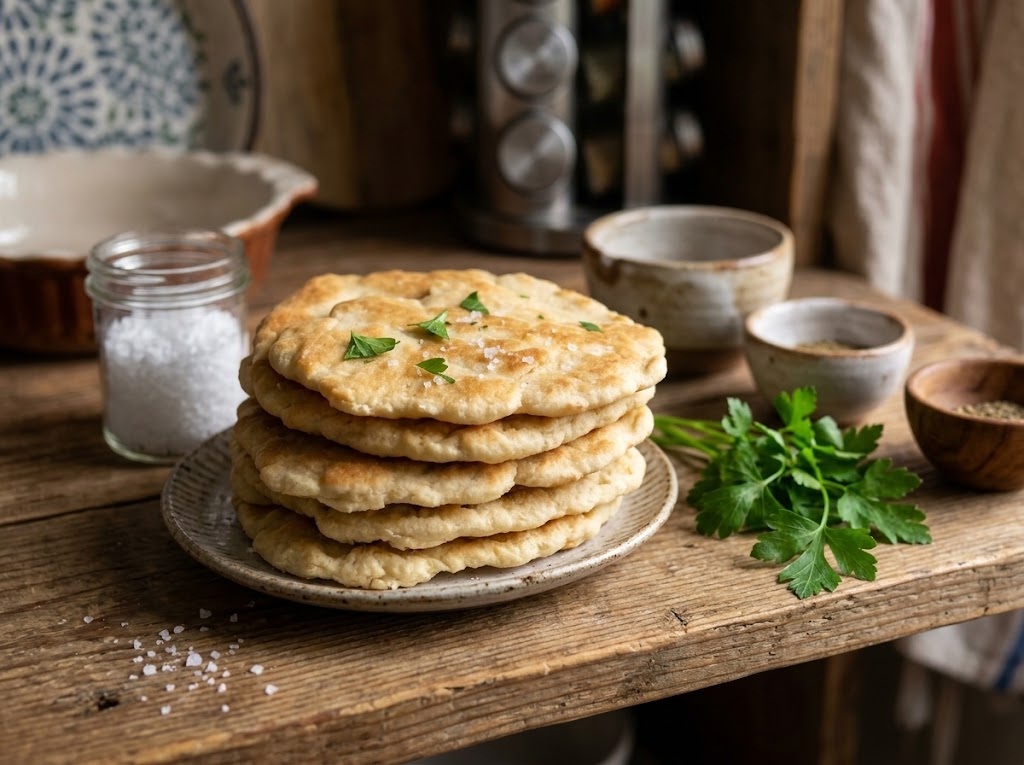
Keto Soft Skillet Flatbread Recipe
 Recipe by admin1
This quick low-carb skillet bread is fried until lightly browned, then brushed with melted butter and finished with salt and chopped parsley.
4
servings5
minutes2
minutes232
kcal4
g7
minutesIngredients
1 cup Almond Flour
2 tbsp Coconut Flour
2 tsp Xanthan Gum
1/2 tsp Baking Powder
1/2 tsp Falk Salt
1 Whole Egg + 1 Egg White
1 tbsp Water
1 tbsp Oil for frying
1 tbsp melted Butter-for slathering
Directions
- Whisk together the Almond Flour, Coconut Flour, Xanthan Gum, Baking Powder, and Falk Salt until everything is evenly combined.
- Add 1 Whole Egg + 1 Egg White to the dry mixture. Beat gently until the ingredients begin to come together and a dough starts to form.
- Add 1 tablespoon of Water. Work the dough so the flours and Xanthan Gum can absorb the moisture and the mixture becomes easier to handle.
- Cut the dough into 4 equal portions. Press each portion out using cling wrap, keeping the flatbreads fairly even in thickness. Small dimples and imperfect edges are fine.
- Heat a large skillet over medium heat and add the Oil for frying. Fry each flatbread for about 1 minute on each side until cooked and lightly browned.
- Brush each hot flatbread with the melted Butter-for slathering. Garnish with salt and chopped parsley, then serve while warm.
Notes
- Shaping the dough
The flatbreads do not need to be perfectly round. Slight dimples and raised areas can create attractive browned and charred marks during frying. - Portion size
For smaller servings, divide the dough into 5 balls instead of 4. The ingredient quantities remain unchanged.
Nutrition Facts
- Calories: 232kcal
- Fat: 19g
- Carbohydrates: 9g
- Fiber: 5g
- Protein: 9g