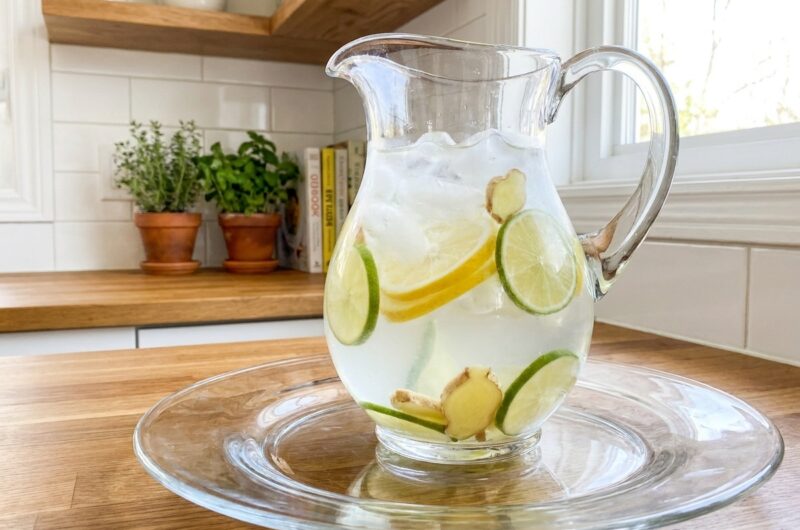
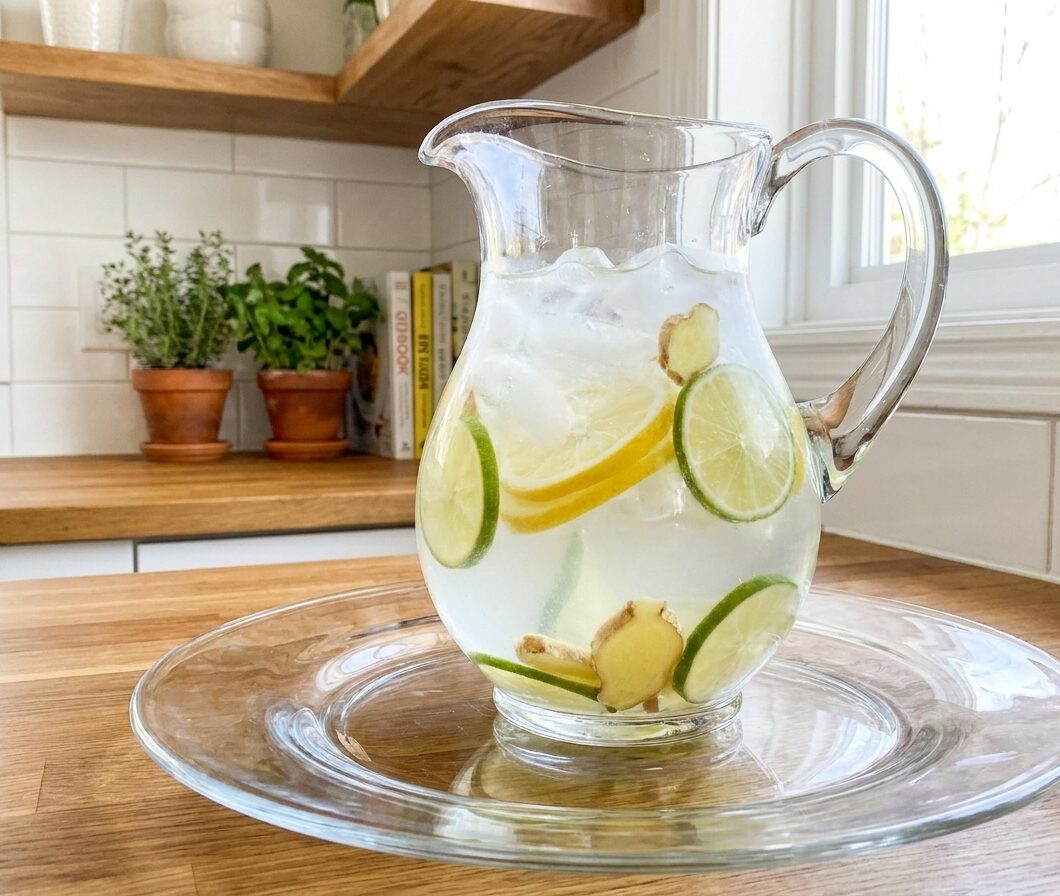
Healthy Ginger Water is a refreshing homemade drink made with fresh ginger, lemon, lime, mint leaves, and a lightly sweetened ginger syrup. It has a pleasant balance of citrusy freshness and the warm, spicy flavor of ginger, making it an enjoyable alternative to plain water or sugary soft drinks. Served chilled with ice, this homemade ginger drink is suitable for warm afternoons, family meals, and relaxed gatherings. You can also adjust the sweetness to suit your taste by using more or less ginger syrup.
One of the best things about this ginger water recipe is that it uses simple ingredients that are easy to find. Instead of relying on bottled flavorings or ready-made drink concentrates, you prepare a fragrant syrup using fresh ginger root, water, sugar, and lemon zest. Once the syrup has cooled, combine it with cold water, citrus slices, and fresh mint. Allowing the mixture to chill gives the ingredients time to blend, creating a refreshing drink with a bright aroma and a clean, spicy finish.
What Makes Healthy Ginger Water Special?
Healthy Ginger Water stands out because it combines the distinctive flavor of fresh ginger with the refreshing taste of lemon, lime, and mint. Ginger provides gentle warmth, while the citrus ingredients add a tangy flavor that keeps the drink lively and pleasant. Fresh mint contributes a cool herbal note, helping balance the stronger taste of ginger. Together, these ingredients create a homemade beverage that feels more interesting than ordinary water without requiring complicated preparation or special equipment.
Another appealing feature is the homemade ginger syrup. Preparing the syrup separately allows you to control the flavor and sweetness of the finished drink. Rather than adding sugar directly to cold water, you dissolve it in warm water and infuse it with grated ginger and lemon zest. This process helps distribute the ginger flavor throughout the syrup. You can then add just the amount needed for your preferred level of sweetness, making the recipe easy to customize for different tastes.
This drink is also convenient to prepare ahead of time. The syrup can be made in advance and refrigerated until you are ready to mix the beverage. When guests arrive or you need something refreshing with dinner, simply combine the syrup with cold water and the fresh ingredients. A little chilling time allows the citrus, ginger, and mint to infuse the liquid, so the finished drink tastes more balanced and aromatic.
Ingredients You Need for Ginger Water
Fresh ginger root
Fresh ginger root is the main ingredient responsible for the drink’s warm, spicy character. Choose ginger that feels firm and has relatively smooth, light-brown skin. Avoid pieces that feel soft, look shriveled, or have visible mold or dark, damaged areas. For this recipe, approximately one two-inch piece of ginger is enough to prepare the syrup. The ginger is grated before being added to the warm syrup, which helps release its natural aroma and distinctive flavor.
You can use either fresh or frozen ginger root. Frozen ginger is particularly convenient because it becomes firm and easy to grate into fine pieces. This can also make it easier to handle when working with fibrous ginger. If you regularly cook with ginger, keeping a few clean pieces in the freezer is a practical way to have it available whenever you need it. Wash the roots thoroughly, dry them completely, and place them in a freezer-safe bag before freezing.
Water and sugar
Water forms the base of both the ginger syrup and the finished drink. The first cup of water is heated with sugar to create a simple syrup, while four additional cups of water are mixed with the prepared syrup to make the beverage. Using cold water for the final mixture helps keep the drink refreshing, especially when it is served over ice.
Sugar is included to soften ginger’s sharp, spicy flavor and balance the tartness of the citrus. The recipe uses half a cup of sugar to prepare the syrup, but you do not have to use all the syrup in the final drink. Starting with the recommended half-cup portion gives you a lightly sweetened beverage that you can adjust according to preference. Remember that the syrup contains the recipe’s added sugar, so using less syrup also reduces the amount of added sugar in each serving.
Lemon zest and fresh citrus slices
Lemon zest gives the homemade ginger syrup a bright citrus aroma. Use a vegetable peeler to remove long strips of the yellow outer skin from one lemon. Avoid including too much of the white pith underneath, as it can introduce a bitter flavor. The zest infuses into the warm syrup and is strained out before the syrup is chilled.
Thin slices of lemon and lime are added to the finished drink for extra citrus flavor and an attractive appearance. Lemon provides a familiar tang, while lime contributes a slightly different, sharper citrus note. A few slices of fresh ginger can also be placed directly into the pitcher to give the drink a more pronounced ginger aroma as it chills. Wash all the citrus fruit carefully before slicing, particularly when the peel will remain in the beverage.
Fresh mint leaves
Fresh mint leaves bring a cooling herbal aroma that complements the warmth of ginger. They also make the finished drink look inviting without the need for artificial colors or decorative additions. Choose fresh, green leaves without dark spots or wilted edges, and rinse them under clean running water before use. You can add whole leaves to the pitcher or gently press them between clean fingers to release more of their aroma.
Mint is best added during the chilling stage rather than heated with the syrup. This preserves its fresh character and allows its flavor to mingle with the ginger and citrus. If you prefer a stronger mint taste, add a few extra leaves, but begin with a moderate amount so the herbal flavor does not overpower the other ingredients.
How to Make Homemade Ginger Syrup
Prepare the ginger
Start by measuring the ginger root and grating it with a microplane or another fine-holed grater. If you are using frozen ginger, there is generally no need to thaw it completely before grating. Work carefully and keep your fingers away from the grater’s sharp surface. The ginger is used with its skin on in this recipe, so wash it thoroughly before grating to remove any soil or residue.
Grating the ginger into small pieces helps expose more of its surface to the warm syrup. This encourages the ginger’s aroma and spicy flavor to infuse into the liquid. If you only have fresh ginger available, you can use it in the same way. The important point is to prepare it finely enough that the warm syrup can absorb its flavor before the mixture is strained.
Make the simple syrup
Pour one cup of water into a small saucepan and add half a cup of sugar. Place the saucepan over medium heat, stirring until the sugar dissolves. Allow the liquid to reach a gentle boil, then remove the pan from the heat. There is no need to cook the syrup for a long time or let it reduce significantly. The aim is simply to dissolve the sugar and create a warm liquid suitable for infusing with ginger and lemon zest.
Use a saucepan with enough room for the liquid to be stirred comfortably. Keep an eye on the mixture while heating, and avoid leaving it unattended. Once the sugar has dissolved and the syrup has reached a low boil, turn off the heat before adding the flavoring ingredients. Removing the pan from the stove helps prevent unnecessary cooking of the ginger and lemon zest.
Infuse the ginger and lemon zest
Add the grated ginger and strips of lemon zest to the warm syrup. Stir gently to distribute the ingredients, then cover the saucepan and leave it to rest for approximately one hour. During this time, the liquid absorbs the aromatic qualities of the ginger and lemon peel. Keeping the pan covered helps retain the aroma and reduces the chance of unwanted particles entering the syrup while it rests.
Allowing the syrup to infuse without additional boiling is an important part of this method. Excessive cooking can change the flavor and cause some of the brighter citrus notes to fade. The resting period gives the ginger enough time to flavor the syrup while keeping the process simple. Once the hour has passed, the liquid should have a noticeable ginger aroma and a pleasant citrus fragrance.
Strain and chill the syrup
Place a fine-mesh strainer over a clean bowl or heat-safe container, then carefully pour the infused syrup through it. Use the back of a spoon to press the ginger pulp gently against the strainer, allowing the remaining liquid to drain into the bowl. Remove the ginger pulp and lemon zest after straining. The resulting syrup should be relatively clear, although its exact appearance can vary depending on how finely the ginger was grated.
Let the syrup cool safely before transferring it to the refrigerator. Chill it until completely cold before preparing the final drink. The recipe makes approximately one cup of syrup, although the precise yield can vary slightly. Because the finished beverage uses only part of the syrup, you may have some left over for another pitcher or another occasion.
How to Prepare Healthy Ginger Water
Combine the ingredients
Once the ginger syrup is completely chilled, measure half a cup and pour it into a clean pitcher. Add four cups of cold water and stir thoroughly to distribute the syrup throughout the liquid. This creates the base of your homemade ginger water. If you prefer a stronger ginger flavor, you can adjust the syrup quantity slightly, keeping in mind that adding more syrup will also increase the sweetness of the drink.
Add thin slices of lemon, lime, and fresh ginger to the pitcher, followed by the fresh mint leaves. Stir gently so the ingredients are evenly distributed without breaking the citrus slices or crushing the mint too much. Using a transparent glass pitcher can make the colorful ingredients visible, but any clean pitcher with enough capacity will work well for this recipe.
Chill to develop the flavor
Place the pitcher in the refrigerator for at least another 30 minutes. This resting period allows the ginger, citrus slices, and mint to release some of their flavor into the water. The result is a more aromatic drink with a balanced combination of spicy, tangy, and refreshing notes. If you have enough time, you can leave it chilled a little longer, checking the flavor before serving.
For the freshest taste, add the ice cubes shortly before serving rather than leaving a large amount of ice in the pitcher for an extended period. As ice melts, it dilutes the drink and can weaken the ginger and citrus flavors. Keeping the pitcher refrigerated and adding ice to individual glasses is another useful option, particularly if you expect the beverage to be served gradually throughout a meal.
Serve and enjoy
Give the ginger water a final stir before pouring it into glasses. Add ice cubes and include a slice of lemon or lime, a small piece of fresh ginger, or a mint leaf if desired. The drink is best served cold, when the citrus notes and refreshing mint complement the warm flavor of ginger. Its simple ingredients make it suitable for everyday meals, weekend lunches, family dinners, and informal gatherings.
This homemade ginger water can be served as an alternative to plain water when you want a little extra flavor. It also works well alongside meals that include grilled vegetables, rice dishes, salads, sandwiches, or other light foods. Because the recipe is easy to adjust, you can prepare it mildly flavored for everyday drinking or make it a little more intense for people who enjoy the distinctive taste of fresh ginger.
Frequently Asked Questions
Can I make ginger water without sugar?
Yes. You can prepare ginger-infused water using fresh ginger, lemon, lime, mint, and cold water without making the sweetened syrup. The result will taste more spicy and less rounded because sugar normally softens the sharper flavors. Start with a small quantity of grated ginger or thin slices, allow the mixture to infuse in the refrigerator, and adjust the citrus and mint according to your preference.
Can I use fresh ginger instead of frozen ginger?
Absolutely. Fresh and frozen ginger can both be used to make this recipe. Frozen ginger is often easier to grate because it becomes firm, while fresh ginger may be softer and more fibrous. Wash the root thoroughly before use, then grate it with a fine grater. There is no need to change the stated ingredient quantity simply because you choose fresh ginger instead of frozen ginger.
How long should ginger water chill?
Allow the strained syrup to cool and chill before mixing it with the cold water. After adding the lemon, lime, ginger slices, and mint, refrigerate the pitcher for at least another 30 minutes. This gives the flavors time to infuse. You can chill it longer if needed, but check the flavor periodically to ensure the citrus peel and mint do not become overpowering.
How long does homemade ginger syrup last?
The leftover syrup can be kept in a clean, airtight glass container in the refrigerator for up to one week, as specified in the recipe notes. Use clean utensils whenever you take syrup from the container, and refrigerate it promptly after use. If its appearance, smell, or texture changes unexpectedly, discard it rather than tasting it to determine whether it is safe.
Healthy Ginger water
 Recipe by admin1
A refreshing homemade ginger drink infused with lemon, lime, and fresh mint. Lightly sweetened with ginger syrup, this chilled beverage is easy to customize and serve with everyday meals.
5
servings5
minutes1
hour1
hour5
minutesIngredients
- For the ginger syrup
2 ounces unpeeled frozen (or fresh) ginger root (about one 2-inch root)
1 cup water
½ cup sugar
Strips of zest from one lemon (use a vegetable peeler to get large strips)
- For the ginger water
4 cups water (mixed with ½ cup of the prepared syrup)
Thin slices of lemon, lime, and fresh ginger
Fresh mint leaves
Add ice right before serving
Directions
- Use a microplane or a sharp, small-holed grater to grate the unpeeled ginger root. Frozen ginger is easier to grate, but fresh ginger can also be used.
- Use a vegetable peeler to remove long strips of the yellow outer peel from one lemon. Avoid including too much of the white pith.
- Combine one cup of water and half a cup of sugar in a small, one-quart saucepan. Stir until the sugar dissolves, bring to a low boil, and remove from the heat.
- Add the grated ginger and lemon zest to the warm syrup. Cover the saucepan and let it rest for approximately one hour.
- Pour the syrup through a fine-mesh strainer into a clean bowl. Press the ginger pulp gently to extract the remaining liquid, then discard the pulp and lemon zest.
- Refrigerate the strained ginger syrup until completely cold, allowing at least 30 minutes for chilling.
- Add half a cup of the prepared syrup to a pitcher. Pour in four cups of cold water, then add thin slices of lemon, lime, fresh ginger, and fresh mint leaves.
- Refrigerate the pitcher for another 30 minutes or longer. Add two cups of ice shortly before serving, stir gently, and pour into glasses.
Notes
- Wash unpeeled ginger roots carefully to remove dirt and sand. Pat them completely dry with a paper towel, then store them in a freezer-safe bag.
- Use more or less ginger syrup according to your taste. You do not need to use all the syrup prepared for this recipe.
- Keep extra syrup in an airtight glass container in the refrigerator for up to one week.
- Add ice just before serving to prevent excessive dilution. Serve cold with a fresh mint leaf or citrus slice if desired.
- This drink contains added sugar. For a less-sweet version, reduce the syrup or use unsweetened ginger-infused water.