Introduction
No-Knead Gluten-Free Bread is a wonderfully simple homemade loaf that proves you do not need wheat flour or complicated baking techniques to create bakery-quality bread with a soft interior, crisp crust, and delicious flavor. Designed for anyone avoiding gluten due to celiac disease, gluten sensitivity, or personal dietary preference, this recipe removes the challenge traditionally associated with gluten-free baking by eliminating kneading altogether. Instead, a carefully balanced gluten-free flour blend, proper hydration, and a slow rise work together to produce a loaf that is light, tender, and satisfying.
For many home bakers, gluten-free bread can seem intimidating. Wheat flour naturally develops gluten when kneaded, creating the elastic network responsible for trapping gases during fermentation and giving bread its chewy texture. Without gluten, dough behaves very differently—it is often wetter, stickier, and more like a thick batter than a traditional bread dough. Rather than fighting against these characteristics, this no-knead recipe embraces them. By using ingredients such as psyllium husk, xanthan gum (if needed), and a quality gluten-free flour blend, the dough gains enough structure to rise beautifully without requiring extensive handling.
One of the greatest advantages of No-Knead Gluten-Free Bread is its accessibility. Even beginners with little baking experience can achieve excellent results because there is no kneading technique to master. Simply mix the ingredients, allow the dough to rise, transfer it to a baking pan or Dutch oven, and let the oven do the rest. The process is forgiving, making it an ideal starting point for anyone new to gluten-free baking.
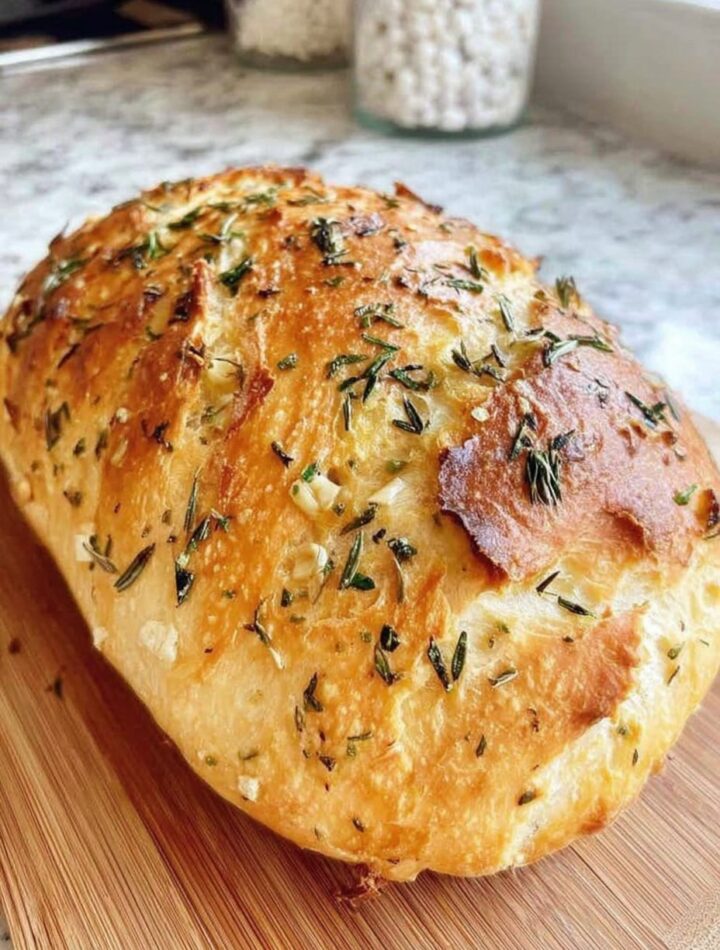
The finished loaf has everything people love about freshly baked bread. The crust develops a beautiful golden color with a pleasant crispness, while the inside remains soft, moist, and airy. Unlike many store-bought gluten-free breads that can be dry, crumbly, or dense, this homemade version stays tender and slices beautifully once cooled. The mild flavor makes it incredibly versatile, pairing equally well with sweet toppings like butter, honey, and jam or savory fillings such as deli meats, cheeses, roasted vegetables, and soups.
The ingredient selection plays a crucial role in achieving the perfect texture. A high-quality gluten-free all-purpose flour blend provides the primary structure, while psyllium husk acts as a natural binder that mimics some of gluten’s elasticity. Warm water hydrates the flour thoroughly, olive oil adds richness and extends freshness, and yeast creates the characteristic rise and airy crumb. A small amount of sugar or honey feeds the yeast during fermentation, while salt enhances the overall flavor.
Another reason this bread has become increasingly popular is its adaptability. Seeds such as sunflower, sesame, flaxseed, chia, or pumpkin seeds can be incorporated into the dough for added nutrition and texture. Herbs like rosemary, thyme, oregano, or basil create a flavorful artisan loaf, while roasted garlic, olives, shredded cheese, or caramelized onions transform it into an impressive centerpiece for special meals. The dough also serves as an excellent base for dinner rolls, sandwich buns, pizza crusts, or focaccia-style breads.
From a nutritional standpoint, homemade gluten-free bread offers several advantages over many commercial alternatives. Store-bought gluten-free loaves often contain preservatives, stabilizers, excessive starches, and added sugars to improve texture and shelf life. Making bread at home gives complete control over ingredient quality while allowing the inclusion of fiber-rich seeds, whole-grain gluten-free flours, and healthier fats. Psyllium husk contributes soluble fiber that supports digestive health, while olive oil provides heart-healthy monounsaturated fats.
The no-knead method also enhances flavor development. Allowing the dough to rest and ferment gradually gives the yeast time to produce subtle, complex flavors that resemble artisan bakery bread. During baking, steam trapped inside the dough helps create an open crumb and a beautifully crisp crust. If baked inside a preheated Dutch oven, the loaf develops an especially rustic appearance with a crackled exterior that rivals professional artisan breads.
Freshly baked No-Knead Gluten-Free Bread fills the kitchen with an irresistible aroma of toasted grains, warm yeast, and baked flour. Few experiences compare to slicing into a loaf while it is still slightly warm, revealing a tender interior ready to be spread with butter or transformed into a delicious sandwich. Whether enjoyed at breakfast, served alongside hearty soups and stews, used for avocado toast, or turned into French toast the next morning, this bread adapts effortlessly to countless meals.
Storage is another strong advantage of this recipe. The loaf remains fresh for several days when properly wrapped, and slices freeze exceptionally well for quick meals throughout the week. Simply toast frozen slices directly from the freezer for a texture nearly identical to freshly baked bread.
No-Knead Gluten-Free Bread demonstrates that homemade gluten-free baking can be both approachable and deeply rewarding. With minimal hands-on effort, simple ingredients, and reliable results, this recipe delivers everything one could want in a loaf: a crisp golden crust, soft and airy crumb, wholesome flavor, and remarkable versatility. Whether you are newly exploring a gluten-free lifestyle or have years of experience baking without wheat, this dependable recipe is destined to become a kitchen favorite, bringing the comforting pleasure of fresh homemade bread to every table.
No-knead gluten-free bread is an easy homemade bread that requires minimal effort and no traditional kneading. It is soft inside with a slightly crusty exterior and is perfect for sandwiches, toast, or serving with soups. Because it is gluten-free, it uses a blend of gluten-free flours and a simple mixing method that relies on time rather than kneading to develop structure.
Ingredients
- 2 cups gluten-free all-purpose flour blend (with xanthan gum included if possible)
- 1/2 cup almond flour (optional for softness and flavor)
- 1 teaspoon salt
- 1 tablespoon sugar or honey
- 1 packet instant yeast (about 2 1/4 teaspoons)
- 1 1/2 cups warm water (not hot)
- 2 tablespoons olive oil or melted butter
- 1 teaspoon apple cider vinegar (helps improve texture)
Step 1: Activate the Yeast (if needed)
If your yeast is not instant, mix it with warm water and sugar. Let it sit for 5–10 minutes until it becomes foamy. This shows the yeast is active.
If using instant yeast, you can skip this step and mix it directly with the dry ingredients.
Step 2: Mix Dry Ingredients
In a large bowl, combine gluten-free flour, almond flour, salt, and yeast. Stir well so everything is evenly distributed.
Proper mixing ensures consistent rise and texture in the final bread.
Step 3: Add Wet Ingredients
Pour in warm water, olive oil, and apple cider vinegar. Mix everything together using a spoon or spatula until you get a thick, sticky dough.
The dough will not look like traditional bread dough; gluten-free dough is usually softer and more batter-like.
Step 4: First Rise
Cover the bowl with a clean towel or plastic wrap. Let the dough rest in a warm place for 1 to 1.5 hours, or until it doubles in size.
During this time, the yeast will create air pockets that help the bread rise.
Step 5: Prepare the Baking Pan
Grease a loaf pan lightly with oil or line it with parchment paper. This prevents sticking and helps with easy removal after baking.
Step 6: Transfer the Dough
Pour the risen dough into the prepared loaf pan. Smooth the top gently with a spatula or wet hand. Do not press too hard, as you want to keep air inside the dough.
Step 7: Second Rise
Let the dough rest again in the pan for 20–30 minutes. This second rise helps improve texture and volume.
Step 8: Bake the Bread
Preheat the oven to 180°C (350°F). Bake the bread for 35–45 minutes, or until the top is golden brown and a toothpick inserted in the center comes out clean.
If the top browns too quickly, cover it loosely with foil.
Step 9: Cool Properly
Remove the bread from the oven and let it cool in the pan for 10 minutes. Then transfer it to a wire rack and allow it to cool completely before slicing.
Cooling is important because gluten-free bread continues to set as it cools.
Serving Suggestions
No-knead gluten-free bread can be served with:
- Butter or jam
- Soups and stews
- Sandwich fillings
- Eggs or avocado
- Cheese and spreads
Tips for Best Results
- Do not skip the resting time; it is essential for structure.
- Use a good gluten-free flour blend for better texture.
- Add a little extra water if the dough feels too thick.
- Let the bread cool fully before slicing to avoid crumbling.
- Store in an airtight container to keep it fresh.
Variations
- Add herbs like rosemary or thyme for savory bread.
- Mix in seeds such as sunflower or chia for texture.
- Add cinnamon and raisins for a sweet version.
- Use dairy-free butter for a vegan option.
Storage Instructions
Store at room temperature for up to 2 days or refrigerate for up to 5 days. You can also freeze slices for longer storage and toast them when needed.
Conclusion
No-knead gluten-free bread is a simple and reliable recipe that produces soft, homemade bread without the need for kneading. With minimal effort and basic ingredients, it is a great option for anyone avoiding gluten but still wanting fresh, warm bread at home.