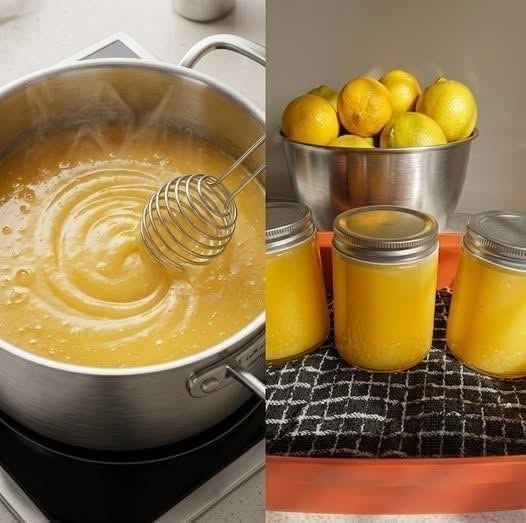
Homemade lemon curd is a smooth, creamy, sweet, and tangy spread made with fresh lemons and a few simple ingredients. It has a bright lemon flavor that makes it perfect for people who enjoy desserts with a little sourness and sweetness. Its soft texture and rich taste can turn an ordinary dessert into something special.
The best thing about this recipe is that you do not need many ingredients or complicated cooking skills. You only need egg yolks, sugar, fresh lemon zest, lemon juice, salt, and butter. The mixture cooks on the stove in about 10 minutes, making it a useful recipe when you want a homemade dessert topping without spending a lot of time in the kitchen.
Lemon curd is also very useful because you can enjoy it in many different ways. Spread it on toast, biscuits, scones, or English muffins for a tasty breakfast or snack. You can also use it as a filling for cakes, cupcakes, crepes, macarons, and other sweet treats. If you enjoy making desserts at home, keeping a jar of lemon curd in the refrigerator gives you an easy way to add fresh lemon flavor whenever you need it.
What Is Lemon Curd?
Lemon curd is a thick, creamy fruit spread made mainly from lemon juice, lemon zest, egg yolks, sugar, and butter. It has a rich texture similar to a soft pudding, but its flavor is much brighter because of the fresh lemons.
Unlike ordinary fruit jam, lemon curd gets its creamy texture from egg yolks and butter. The egg yolks help the mixture become thick as it cooks, while the butter adds richness and a smooth finish. Sugar balances the sharp taste of the lemons, and a small amount of salt helps bring all the flavors together.
The result is a delicious spread that tastes sweet, buttery, and slightly sour at the same time. You can use it as a topping, a filling, or a simple dessert to enjoy by the spoonful.
Making lemon curd at home also allows you to use fresh ingredients and control how you serve it. The preparation is simple, but careful cooking is important because the egg yolks need gentle heat to thicken without turning into scrambled eggs.
Why You Will Love This Recipe
There are several reasons to add homemade lemon curd to your recipe collection.
1. It uses simple ingredients.
You do not need a long shopping list to prepare this recipe. Most of the ingredients are common baking items, and fresh lemons provide the main flavor.
2. It cooks quickly.
The mixture takes about 10 minutes to cook on the stove. You will need to whisk it continuously, but there is no complicated preparation involved.
3. It has a rich lemon flavor.
Fresh lemon juice gives the curd its tangy taste, while lemon zest adds even more lemon flavor. Sugar and butter balance the sharpness and create a rich, pleasant taste.
4. It has many uses.
You can spread lemon curd on breakfast foods, add it to cakes, use it to fill pastries, or serve it with your favorite desserts. One small batch can be used in several different ways.
5. You can prepare it ahead of time.
Once cooked and cooled, lemon curd can be stored in the refrigerator for about 10 days. This makes it useful when you are preparing desserts for a family gathering or special occasion.
Ingredients You Need
This recipe uses six listed ingredients, with five main flavor and thickening ingredients and butter added at the end. Each ingredient has an important role in making the curd smooth, rich, and flavorful.
Egg yolks: You need four large egg yolks. They help thicken the mixture while it cooks. They also give the curd its rich texture. If you prefer a thicker result, see the tip in the recipe card for changing the egg mixture.
Granulated sugar: Use two-thirds of a cup, or 134 grams, of granulated sugar. Sugar reduces the sharpness of the lemon juice and gives the curd its sweet taste.
Lemon zest: One tablespoon of lemon zest, usually from one lemon, adds a strong lemon aroma and flavor. The zest is the thin, colored outer part of the lemon peel. Avoid using the bitter white layer underneath.
Fresh lemon juice: You need one-third of a cup, or 80 milliliters, of fresh lemon juice. This is usually the juice of two to three lemons. Freshly squeezed juice is recommended instead of bottled juice because it provides the fresh flavor needed for this recipe.
Salt: One-eighth of a teaspoon of salt helps balance the sweetness and sourness. Although the amount is small, it contributes to the overall flavor.
Unsalted butter: Use six tablespoons, or 85 grams, of unsalted butter. Let the butter soften to room temperature and cut it into six pieces before cooking. The butter is added after the lemon mixture has thickened. It melts into the warm curd and gives it a smooth, creamy finish.
Equipment for Making Lemon Curd
You will need a double boiler, a whisk, measuring cups and spoons, and a clean jar or bowl for storing the finished curd.
A double boiler is a cooking setup that uses steam and gentle heat to cook food in a bowl or upper pot placed above simmering water. This method is helpful for lemon curd because direct heat can cook the eggs too quickly.
If you do not have a double boiler, you can make one at home using a small, heatproof glass bowl and a larger saucepan. The bowl should sit securely over the saucepan without touching the water below.
A silicone whisk is a useful choice for mixing the ingredients. A heatproof glass bowl is also a good option because lemon juice and eggs can sometimes react with certain metal cooking surfaces and create an unwanted metallic taste.
Step-by-Step Instructions

Step 1: Prepare the Double Boiler
Begin by adding about one to two inches of water to the bottom pot of your double boiler. Place the pot on the stove over high heat and wait until the water begins to boil.
Once the water starts boiling, lower the heat. Keep the water at a gentle simmer rather than allowing it to boil too strongly.
The purpose of this step is to create gentle heat for cooking the lemon curd. The upper pot or bowl will be warmed by the steam from the water underneath it.
If you are using a heatproof glass bowl instead of a proper double boiler, place the bowl over a saucepan of simmering water. Make sure the bottom of the bowl does not touch the water.
Step 2: Mix the Lemon Curd Ingredients
Add the egg yolks, granulated sugar, lemon zest, fresh lemon juice, and salt to the top pot of the double boiler.
Use a whisk to mix everything until the ingredients are well combined. The mixture should look evenly blended, with the sugar and lemon juice mixed into the egg yolks.
At this stage, do not add the butter. It will be added after the lemon mixture has thickened.
Step 3: Cook While Whisking
Keep the lemon mixture over the simmering water and whisk continuously as it cooks.
This is the most important step in the recipe. Constant whisking helps the mixture heat evenly and prevents the egg yolks from forming lumps or curdling.
Continue whisking for about 10 minutes. As the mixture heats, it will gradually become thicker. At first, it may look thin, but it should slowly develop a smooth texture similar to hollandaise sauce.
If you want to check the temperature, use a candy thermometer or an instant-read thermometer. The mixture should reach approximately 170°F (77°C).
If the curd is not becoming thick, slightly increase the heat while continuing to whisk. Keep the heat gentle enough to avoid cooking the eggs too quickly.
Remember that lemon curd should not be cooked directly over the stove’s heat. Using the double-boiler method gives you better control and helps protect the texture.
Step 4: Add the Butter
Once the lemon mixture becomes thick, remove the upper pot or bowl from the heat.
Add the six pieces of softened butter to the hot lemon curd. Whisk until all the butter melts and combines with the mixture.
The warmth of the curd will melt the butter, so you do not need to return the mixture to direct heat.
Continue mixing until the curd looks smooth and creamy. The butter adds richness and helps create the soft texture that makes lemon curd so enjoyable.
Step 5: Transfer the Curd to a Container
Pour the finished lemon curd into a clean jar or bowl.
Place a piece of plastic wrap directly on the surface of the curd. The wrap should touch the top of the mixture rather than simply covering the opening of the container.
This helps prevent a skin from forming as the curd cools.
Allow the curd to cool. It will become thicker as its temperature drops. Once it is cool, you can remove the plastic wrap.
Step 6: Refrigerate the Lemon Curd
After preparing the lemon curd, store it in the refrigerator. It can be kept for about 10 days.
Keep the curd in a clean, covered container and use a clean spoon when serving it. Refrigeration helps maintain its quality, texture, and flavor.
You can prepare it ahead of time and use it whenever you want to add a fresh lemon flavor to breakfast foods, cakes, or other desserts.
How to Serve Lemon Curd

Lemon curd is a versatile spread that works well with many sweet foods. Here are some easy ways to enjoy it.
With breakfast foods: Spread lemon curd on scones, muffins, biscuits, English muffins, or toast. You can also serve it with waffles, pancakes, or a Dutch baby pancake.
As a cake filling: Add a layer of lemon curd between cake layers to give your dessert a sweet and tangy flavor. It works well in lemon cakes, lemon coconut cakes, and other cakes that pair nicely with citrus.
Inside cupcakes: Use lemon curd as a filling for cupcakes. Its bright flavor works particularly well with vanilla, lemon, and blueberry cupcakes.
With pastries: Lemon curd can be used to fill crepes, French macarons, choux pastry, and eclairs. It can also add flavor to strawberry shortcake and other layered desserts.
As a dessert topping: Spoon it over pound cake, chiffon cake, pavlova, cheesecake, or a slice of plain cake. You can also stir a little into yogurt or cottage cheese, or spoon it over ice cream.
For special desserts: Use lemon curd in a lemon berry trifle or spread it on gingerbread waffles. You can also mix it with whipped frosting to create a flavorful cake filling.
Because lemon curd has a strong flavor, a small amount can make a noticeable difference. Pair it with plain or lightly sweetened foods to enjoy its lemon taste.
Can You Make Lemon Curd With Other Fruits?
Yes. The same general method can be used to make curd with other citrus fruits. You can replace the lemons with limes, grapefruit, or oranges to create different flavors.
Pineapple juice can also be used for a pineapple-flavored curd, and cranberries can be used to prepare a cranberry version.
Keep in mind that different fruits have different levels of sweetness and sourness, so the flavor and texture may vary when you use a different fruit. The quantities and instructions in the recipe card below are for the original lemon version.
Common Mistakes to Avoid
Cooking over direct heat: Direct heat can cook the egg yolks too quickly and spoil the smooth texture. Use a double boiler or the heatproof glass bowl method.
Stopping the whisking: The mixture needs continuous whisking while it cooks. This helps prevent the eggs from curdling and allows the curd to thicken evenly.
Using bottled lemon juice: Freshly squeezed lemon juice is recommended for the best flavor in this recipe.
Adding butter too early: Wait until the lemon mixture has thickened and been removed from the heat before whisking in the butter.
Expecting the curd to be fully thick while hot: Lemon curd continues to thicken as it cools, so allow it time to cool before judging its final consistency.
Using the wrong container or cooking surface: Avoid materials that may react with the acidic lemon mixture. A heatproof glass bowl and a suitable non-metal double boiler are useful choices.
Lemon Curd Recipe

Homemade Lemon Curd
A creamy, sweet, and tangy lemon spread made with fresh lemon juice, egg yolks, sugar, and butter. Enjoy it with scones, toast, cakes, pastries, or your favorite desserts.
Prep time
5 minutes
Cook time
10 minutes
Total time
1 hour 15 minutes
Yield
1–1.5 cups
Ingredients
- 4 large egg yolks
- ⅔ cup (134 g) granulated sugar
- 1 tablespoon lemon zest (about 1 lemon)
- ⅓ cup (80 ml) fresh lemon juice (about 2–3 lemons)
- ⅛ teaspoon salt
- 6 tablespoons (85 g) unsalted butter, softened to room temperature and cut into 6 pieces
Instructions
- Prepare the double boiler. Add 1–2 inches of water to the bottom pot. Bring it to a boil over high heat, then lower the heat to keep the water simmering gently.
- Mix the ingredients. Add the egg yolks, sugar, lemon zest, lemon juice, and salt to the top pot. Whisk until everything is well combined.
- Cook the mixture. Keep whisking continuously for about 10 minutes until the mixture becomes thick, like hollandaise sauce. It should reach about 170°F (77°C) if checked with a thermometer. If it is not thickening, slightly increase the heat while whisking. Do not cook it over direct heat.
- Add the butter. Remove the pot from the heat. Add the butter pieces and whisk until they melt completely into the lemon mixture.
- Cool the curd. Pour it into a jar or bowl. Place plastic wrap directly on the surface to prevent a skin from forming. Let it cool; it will thicken more as it cools.
- Refrigerate. Store the cooled lemon curd in the refrigerator for about 10 days.
Tips & Tricks
- For thicker curd: Replace 2 egg yolks with 1 whole egg. Use 2 egg yolks plus 1 whole egg, keeping the other ingredients and instructions the same.
- Use fresh lemons: Freshly squeezed lemon juice gives the best flavor. Avoid bottled lemon juice.
- Using salted butter: You can use salted butter instead of unsalted butter. If you do, leave out the ⅛ teaspoon of salt.
- No double boiler? Place a small, heatproof glass bowl over a saucepan of simmering water. Make sure the bowl does not touch the water.
- Avoid a metallic taste: Use a non-metal double boiler or a heatproof glass bowl. A silicone whisk is also a good choice.
- No need to strain: The cooked lemon zest is very small and adds flavor. If you prefer a smoother curd, pass it through a fine-mesh sieve.
- Freezing: Freeze the curd for 3–6 months. Thaw it overnight in the refrigerator before serving.
Storage
Keep refrigerated for about 10 days. For longer storage, freeze for 3–6 months.