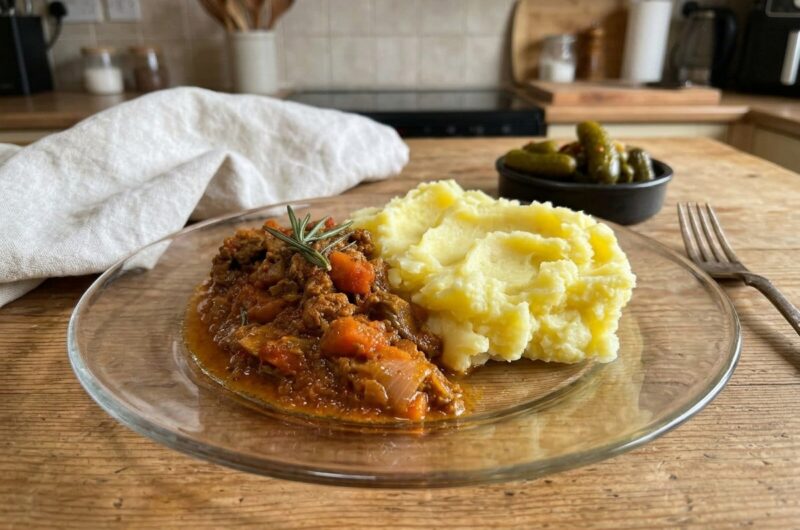
Beef stew with creamy mashed potatoes is a comforting homemade dinner that combines tender beef, rich savoury flavours, and smooth potatoes in one satisfying meal. This classic comfort food is ideal for family dinners, chilly evenings, and days when you want something hearty without spending the entire evening in the kitchen. The beef stew provides a delicious, warming centrepiece, while creamy mashed potatoes or a soft vegetable mash make the perfect accompaniment for soaking up the flavourful gravy.
One of the best things about this meal is its suitability for preparing ahead. A generous pot of beef stew can provide dinner today and another satisfying meal tomorrow, making it a practical choice for busy households. As the stew rests, its flavours have more time to come together, and leftovers can be just as enjoyable as the freshly cooked dish. With thoughtful preparation and a little patience, beef stew with mashed potatoes can become a reliable favourite for everyday meals.
What Makes Beef Stew with Creamy Mashed Potatoes Special?
The combination of slow-cooked beef and creamy potatoes works because each component brings something different to the plate. Beef cooked gently in a flavourful liquid becomes tender, while the gravy develops a deep, savoury taste. Mashed potatoes add a soft, buttery texture that balances the richness of the meat. Together, these elements create a filling dinner that feels satisfying without needing an elaborate selection of side dishes.
This meal is also easy to adapt to different preferences. Some people enjoy their mashed potatoes completely smooth, while others prefer a slightly rustic texture. Vegetable mash offers another way to add variety and can complement the beef just as well. Depending on the ingredients used in your original recipe, the stew may also include vegetables that contribute colour, sweetness, and additional texture. The result is a flexible home-cooked meal suitable for relaxed family dining or preparing portions for later.
Why This Beef Stew Is Suitable for Busy Weeknights
Planning dinner around a busy schedule can be challenging, particularly when you want a homemade meal rather than something prepared at the last minute. Beef stew is useful because much of its cooking time involves gentle simmering instead of constant hands-on work. Once the ingredients have been prepared and the cooking process is underway, you can turn your attention to preparing the potatoes, setting the table, or completing other kitchen tasks.
The recipe is especially practical when you prepare enough for more than one meal. Leftover stew can be portioned into containers and refrigerated for the next day, while extra portions can be frozen for future dinners. Preparing the stew in advance can also make serving easier because the main component is already cooked. When you are ready to eat, reheat the stew thoroughly and serve it with freshly prepared or gently reheated mashed potatoes.
Choosing Beef for a Tender, Flavourful Stew
The cut of beef plays an important role in determining the final texture of a stew. Beef chuck and other suitable slow-cooking cuts are popular choices because their connective tissue gradually softens during extended cooking. This process helps the meat become tender and contributes body to the cooking liquid. Very lean cuts may not produce the same texture and can become dry if they are cooked for too long using an unsuitable method.
Cutting the beef into pieces of a similar size helps it cook more evenly. Before browning, pat the meat dry with kitchen paper to remove excess surface moisture. If the recipe calls for browning, use a sufficiently hot pan and avoid overcrowding it. Working in batches allows the beef to develop a deeper colour rather than steaming in its own released liquid. These small preparation details can make a noticeable difference to the finished stew.
Developing a Rich Beef Stew Gravy
A delicious beef stew depends on more than tender meat. The gravy should have a savoury flavour and a consistency that coats the beef and complements the mashed potatoes. Browning the meat, when required by the recipe, creates caramelised flavours that help give the stew depth. Cooking the other ingredients in the same pot can capture some of the browned residue, allowing it to contribute to the final sauce.
Gentle simmering is important because it gives the beef time to soften while allowing the flavours to combine gradually. A vigorous boil can cause too much liquid to evaporate and may make it harder to control the cooking process. Check the pot occasionally and add suitable cooking liquid if necessary. If the beef becomes tender before the gravy reaches the desired thickness, you can reduce the liquid carefully, following the needs of the original recipe.
Seasoning is best checked toward the end of cooking, when the gravy has developed its flavour. As liquid evaporates, the remaining seasoning becomes more concentrated, so adding too much salt at the beginning can make the finished dish overly salty. Taste the stew before serving and adjust the seasoning gradually. The aim is to create a balanced gravy that enhances the beef without overpowering the creamy potatoes served alongside it.
Preparing Creamy Mashed Potatoes
Creamy mashed potatoes are a natural match for beef stew because they provide a soft, smooth base for the rich gravy. For an even result, cut the potatoes into similar-sized pieces before boiling them. Cook them until a fork slides easily into the centre, then drain thoroughly. Potatoes that remain undercooked can produce lumps, while excess water left after draining can make the mash thin and dilute its flavour.
Mash the potatoes while they are still hot, using a potato masher or potato ricer. If the recipe includes butter, milk, or cream, add these ingredients gradually until the potatoes reach the desired consistency. Warm dairy ingredients can blend more easily into the potatoes and help keep them warm. Avoid adding all the liquid at once, because the amount needed can vary depending on the type of potato and how thoroughly it has been drained.
For a light, creamy texture, mix the potatoes gently rather than beating them for an extended period. Overworking potatoes can release excess starch and produce a sticky consistency. Taste the mash before serving and adjust its seasoning according to the recipe. When prepared carefully, the potatoes should be soft enough to absorb gravy while remaining thick enough to hold their shape on the plate.
Creamy Vegetable Mash as an Alternative
Vegetable mash can provide a colourful alternative or additional side dish for beef stew. Its flavour and texture depend on the vegetables used, so the cooking method should suit the ingredients rather than follow the potato method automatically. Some vegetables contain more water than potatoes and may need extra draining before mashing. Others become naturally creamy when cooked until tender and blended or mashed gently.
A vegetable mash can bring a slightly different flavour to the meal while retaining the comforting quality that makes beef stew so appealing. If your original recipe includes a specific vegetable mash, keep its ingredients and quantities unchanged when preparing the dish. Serve the mash beside the beef or place the stew over it, allowing the gravy to coat the vegetables. This arrangement creates a hearty plate with a variety of textures.
How to Serve Beef Stew with Mashed Potatoes
For a simple presentation, place a generous serving of mashed potatoes in a shallow bowl and spoon the beef stew beside or over the top. Include enough gravy to moisten the potatoes without completely covering every component. This makes it easy to enjoy the tender beef and creamy mash together in each bite. Serving the dish while everything is hot helps preserve the comforting texture and brings out the flavours of the gravy.
For family meals, you can also serve the stew and mash in separate dishes so everyone can choose their own portions. A simple green vegetable or fresh salad can add colour and contrast to the richness of the main course. If suitable for the recipe, a small garnish of fresh herbs can provide a fresh finishing touch. There is no need for complicated plating; the appeal of this dish comes from its warm, generous, homemade character.
Make-Ahead Preparation and Meal Planning
Beef stew is well suited to advance preparation because its flavour often develops further after refrigeration. Cooking the stew a day before serving can make dinner easier the following evening, particularly when you have limited time. After cooking, transfer the food into suitable shallow containers and refrigerate it promptly. When ready to serve, reheat the stew thoroughly, stirring occasionally and adding a little suitable liquid if the gravy has thickened.
Mashed potatoes can also be prepared ahead, although their texture is often best when they are freshly made. If you refrigerate them, store them separately from the stew so they are easier to portion and reheat. Warm them gently, stirring occasionally and adding a small amount of milk if needed to restore their creaminess. Preparing the components separately gives you more control over the texture of both the gravy and the potatoes.
Storing and Freezing Leftovers Safely
Store leftover beef stew and mashed potatoes in separate airtight containers and refrigerate them within two hours of cooking. Keep the refrigerator at or below 4°C (40°F), and generally use refrigerated leftovers within three to four days. Smaller containers help food cool more quickly and make it easier to reheat only the quantity you need. Avoid leaving cooked beef or mashed potatoes at room temperature for extended periods, especially in warm weather.
For longer storage, beef stew can be frozen in suitable freezer-safe containers. Leave a little space at the top to allow for expansion, and label each container with the date. For good quality, try to use frozen stew within two to three months. Mashed potatoes can also be frozen separately, although their texture may change slightly after thawing. Thaw food in the refrigerator and reheat until it reaches 74°C (165°F) throughout.
Frequently Asked Questions
Can beef stew with mashed potatoes be made ahead?
Yes, the beef stew can be cooked ahead and refrigerated in an airtight container. Reheat it thoroughly before serving and add a little suitable liquid if the gravy becomes too thick. Mashed potatoes can also be prepared in advance and reheated gently, although freshly made potatoes often have the best texture. Storing both components separately helps preserve their consistency.
Why is the beef still tough?
Beef may remain tough when it has not cooked long enough for the connective tissue to soften. Continue cooking it over a gentle simmer and check periodically until the meat becomes fork-tender. The time required depends on the cut, the size of the beef pieces, and the cooking temperature. A vigorous boil is not a substitute for the time needed for slow cooking.
How can I thicken beef stew gravy?
If the beef is already tender but the gravy is too thin, simmer the liquid uncovered to allow some moisture to evaporate. You can also use an appropriate thickener if it is compatible with the original recipe. Add it gradually and stir thoroughly to prevent lumps. Check the seasoning again after thickening because the flavour may become more concentrated.
Can I freeze the stew and mashed potatoes?
Yes. Both can be frozen in suitable airtight containers, but storing them separately makes reheating easier. Beef stew generally freezes well, while mashed potatoes may experience some texture changes. Thaw the food in the refrigerator and reheat it thoroughly. Stir the potatoes gently and add a little milk if needed to help restore their creamy consistency.
How should leftovers be reheated?
Reheat beef stew in a saucepan over medium-low heat, stirring occasionally until it is steaming hot throughout. Add a little water or suitable stock if the gravy has thickened during storage. Mashed potatoes can be warmed gently in a covered pan or microwave-safe container, with occasional stirring to distribute the heat. Avoid repeated cooling and reheating of the same portion.
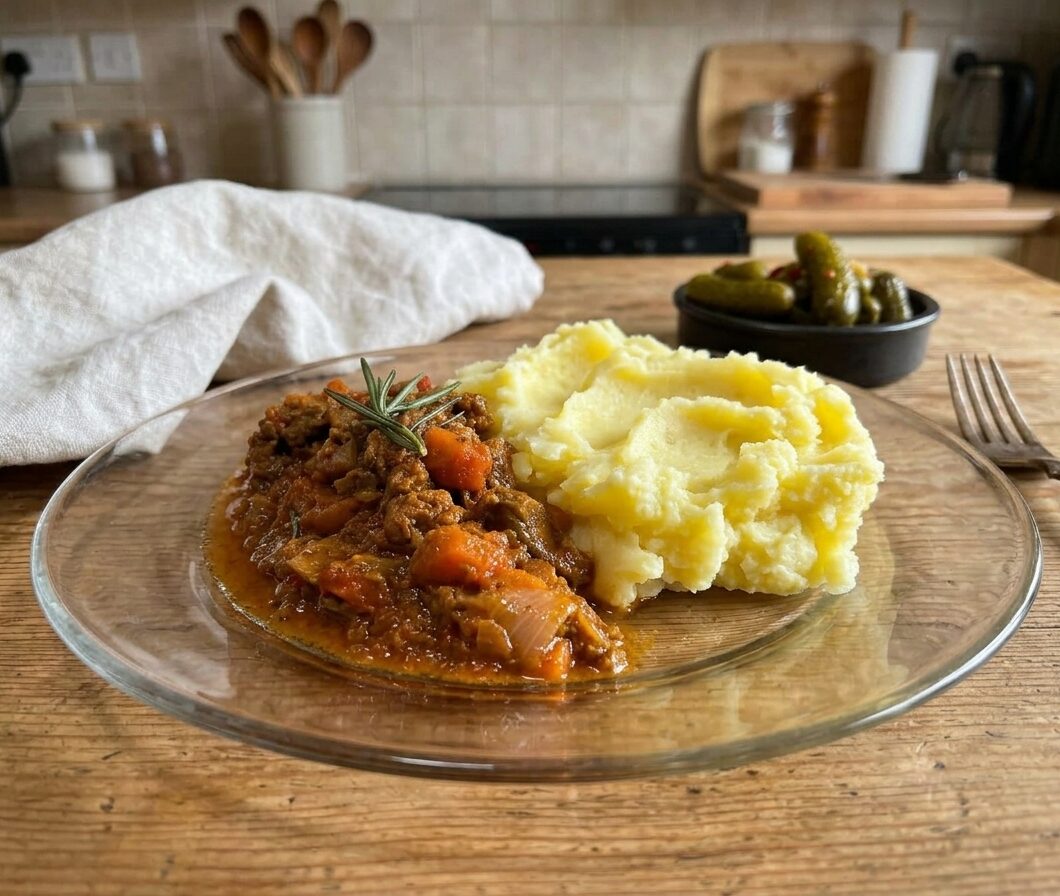
High Protein Beef Stew With Creamy Mashed Potatoes
A comforting homemade beef stew made with lean beef, onions, carrots, garlic, vegetable broth, crushed tomatoes, thyme, and bay leaves, served over creamy mashed potatoes prepared with butter and milk.
4
servings20
minutes1
hour30
minutes1138
kcal1
hour50
minutesIngredients
- Stew
2.2 lbs lean beef cubed
2 large onions chopped
4 large carrots diced
5 garlic cloves minced
4 cups vegetable broth 1 stock cube + water
1 can 14 oz crushed tomatoes
2 teaspoon fresh thyme or 1 teaspoon dried
2 bay leaves optional
2 tablespoon olive oil extra virgin
- Mash
2.2 lbs potatoes peeled and cubed
7 tablespoon butter (just under 1 stick/3.5 oz )
3.5 tablespoon milk
Salt to taste
Directions
- Heat 2 tablespoons of extra virgin olive oil in a large pan or Dutch oven over medium-high heat. Allow the oil to heat for approximately 30 seconds.
- Add all the cubed lean beef to the pan. Cook for about 3 to 4 minutes, turning the pieces so they become lightly browned on different sides.
- Add the chopped onions, diced carrots, minced garlic, thyme, and bay leaves, if using, directly over the beef. Stir everything together for approximately 2 minutes, allowing the onions to soften and the garlic to become fragrant.
- Pour the vegetable broth into the pan and add a pinch of salt. Stir the ingredients together so the beef and vegetables are surrounded by the broth.
- Cover the pan and reduce the heat to low. Allow the stew to simmer gently for 1 hour. Stir every 20 to 30 minutes to help prevent the ingredients from sticking.
- After the first hour, add the crushed tomatoes. Stir well and continue simmering the stew for another 30 minutes.
- While the stew is cooking, peel and cube the potatoes. Place them in salted water and boil for approximately 15 to 20 minutes, or until tender.
- Drain the cooked potatoes thoroughly. Add the butter and milk, then mash until the potatoes are smooth and creamy. Season with salt to taste.
- When the beef stew is ready, remove the bay leaves. Serve the hearty stew over or alongside the creamy mashed potatoes.
- For leftovers, allow the stew and mashed potatoes to cool completely before transferring them to separate airtight containers. Refrigerate for up to 3 days or freeze separately for up to 3 months.
Nutrition Facts
- Total number of serves: 1
- Calories: 1138kcal
- Fat: 78g
- Carbohydrates: 60g
- Fiber: 8g
- Sugar: 10g
- Protein: 50g