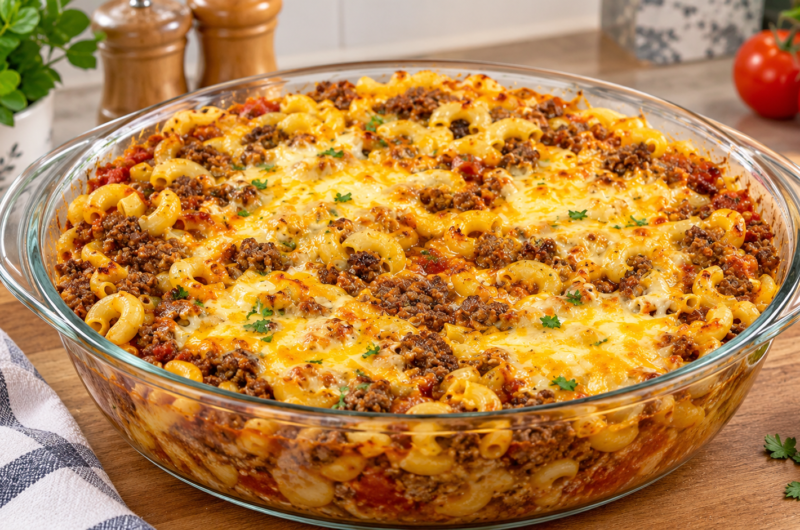
High-Protein Slow Cooker Cheesy Beef Macaroni is a hearty comfort food dinner that combines lean ground beef, elbow macaroni, tomatoes, beef broth, Italian seasoning, and plenty of melted cheddar cheese. The result is a rich and satisfying beef pasta dish with approximately 31 grams of protein per serving, making it a practical option when you want a filling family meal with a substantial amount of protein.
This easy slow cooker beef macaroni recipe is especially useful for busy days because most of the cooking takes place in one appliance after the beef has been browned. The savory beef and tomato base gradually develops flavor while the pasta becomes tender, and cheddar cheese is added near the end for a creamy finish. With familiar ingredients and uncomplicated preparation, it works well for weeknight dinners, family meals, or meal prep.
Why This Recipe Popular
- A good family dinner should be flavorful, filling, and reasonably easy to prepare. This slow cooker cheesy beef macaroni meets all three requirements. Lean ground beef provides plenty of savory flavor and protein, elbow macaroni gives the dish its classic comforting texture, and shredded cheddar creates the creamy cheese finish that makes beef macaroni so satisfying.
- Another advantage is the simple ingredient list. You do not need specialty products or complicated sauces to prepare the recipe. Onion, garlic, canned tomatoes, beef broth, Italian seasoning, pasta, and cheddar cheese form the main flavor base. Once everything is assembled, the slow cooker handles most of the remaining work, making the recipe particularly convenient when you do not want to stand over the stove.
A High-Protein Comfort Food Dinner
- This recipe provides approximately 31 grams of protein per serving according to the supplied nutritional information. Much of that protein comes from the lean ground beef and cheddar cheese, while the pasta contributes additional protein. This makes the dish more protein-rich than many simple pasta recipes that rely mainly on noodles and tomato sauce.
- At the same time, this remains a rich comfort food meal rather than a low-fat dish. Each approximate serving contains 485 calories and 26 grams of fat, including 12 grams of saturated fat. Portion size and the exact brands of beef, cheese, broth, and pasta used can affect the final nutritional values.
Why Slow Cooker Beef Macaroni Works
- Slow cooking offers convenience because the main ingredients can cook together without requiring constant attention. Once the beef mixture has been browned and transferred to the slow cooker, the tomatoes, broth, seasonings, and macaroni are added and allowed to cook until the pasta becomes tender.
- The cooking liquid is particularly important. Beef broth and the juices from the diced tomatoes provide moisture for the macaroni while also carrying savory flavor throughout the dish. The optional tomato sauce creates a thicker consistency when used, while Italian seasoning gives the tomato and beef mixture a familiar herb flavor.
Choosing Lean Ground Beef
- The recipe calls for one pound, or approximately 450 grams, of lean ground beef. Beef with an 85/15 or 90/10 lean-to-fat ratio is recommended. Using lean ground beef provides the rich flavor needed for cheesy beef macaroni without leaving an excessive amount of grease in the finished pasta.
- Even when using lean beef, drain excess fat after browning if necessary. This prevents unnecessary grease from being transferred into the slow cooker. The browned beef should remain moist and flavorful but not sit in a large amount of rendered fat.
Why the Beef Should Be Browned First
- Although this is a slow cooker recipe, the ground beef is browned in a skillet before being transferred to the slow cooker. Add the beef, finely diced onion, and minced garlic to a large skillet over medium heat. Cook until the beef is completely browned and the onion becomes tender, then drain excess fat.
- This short stovetop step improves both flavor and texture. Browning develops savory notes that would be difficult to achieve if raw ground beef were simply simmered with the other ingredients. It also allows you to remove excess grease before the remaining ingredients are combined.
Onion and Garlic Build the Flavor Base
- One small finely diced onion and two minced garlic cloves cook alongside the ground beef. These simple aromatics create an important flavor foundation for the tomato, broth, herbs, pasta, and cheese added later.
- Cooking the onion with the beef gives it time to soften and lose its raw sharpness. The garlic blends into the savory meat mixture, helping create a more developed flavor without requiring a long list of spices. Together with Italian seasoning, these ingredients give the finished beef macaroni a familiar homemade character.
Tomatoes Add Richness and Acidity
- One 14.5-ounce can of diced tomatoes, including all of its juices, is added to the slow cooker. The tomatoes contribute acidity, moisture, color, and a fresh tomato character that helps balance the richness of the beef and cheddar cheese.
- The recipe also includes one 15-ounce can of tomato sauce as an optional ingredient. Adding it produces a thicker, more tomato-forward sauce, while leaving it out creates a somewhat lighter consistency. Since tomato sauce is specifically marked optional in the original recipe, either approach remains consistent with the supplied ingredients.
Beef Broth Creates the Savory Cooking Liquid
- Two cups of beef broth provide the main cooking liquid for the pasta. Low-sodium broth is recommended because the recipe already contains cheddar cheese and additional salt to taste. Using a lower-sodium broth gives you greater control over the final seasoning.
- The macaroni absorbs some of this liquid while cooking, so the broth does more than simply create a sauce. Its flavor moves directly into the pasta, complementing the browned beef and tomatoes. This is one reason the finished macaroni develops a more savory taste than pasta boiled separately in plain water.
Italian Seasoning Keeps the Flavor Simple
- Two teaspoons of Italian seasoning provide the herb component. A prepared Italian seasoning blend generally works well in tomato-based pasta dishes because it introduces several complementary dried herb flavors without requiring individual measurements.
- Salt and black pepper are added according to taste. Because canned tomatoes, broth, and cheddar can all contribute sodium, avoid heavily seasoning at the beginning. It is easier to adjust the final flavor later than to correct a dish that has become excessively salty.
Why Elbow Macaroni Is Ideal
- The recipe uses two cups of uncooked elbow macaroni. This familiar pasta shape works particularly well with ground beef because the small pieces mix evenly throughout the dish. The curved macaroni also catches some of the cheesy tomato-beef sauce, creating a consistent mixture in every serving.
- Because the macaroni goes into the slow cooker uncooked, it absorbs the seasoned liquid rather than being boiled separately. However, pasta can become overly soft when cooked too long, so checking its texture near the minimum recommended cooking time is important.
How to Assemble the Slow Cooker
- Once the beef, onion, and garlic have been browned, transfer the mixture to the slow cooker. Add the diced tomatoes with their juices, optional tomato sauce, two cups of beef broth, Italian seasoning, salt, black pepper, and uncooked elbow macaroni.
- Stir thoroughly so the pasta is evenly distributed through the cooking liquid rather than remaining in one large pile. Good distribution helps the macaroni cook more consistently and allows it to absorb the tomato and beef flavors as it softens.
Slow Cooker Time and Temperature
- Cover the slow cooker and cook on LOW for three to four hours or HIGH for two to three hours. Begin checking the macaroni near the lower end of the recommended cooking range because slow cookers vary in temperature and pasta can quickly progress from tender to overly soft.
- The pasta should be tender when the cooking stage is complete but should still maintain its shape. Avoid assuming that a longer cooking time automatically produces better flavor. Once the macaroni reaches the desired texture, it is time to add the cheese.
Adding the Cheddar Cheese
- The recipe uses two cups of shredded cheddar cheese, divided. Once the macaroni is tender, stir one and a half cups of cheddar directly into the beef and pasta mixture. Continue stirring until the cheese melts and creates a creamy consistency.
- Sprinkle the remaining half cup over the top. Replace the slow cooker lid and allow the dish to rest for approximately ten minutes. The trapped heat melts the final cheese layer, giving the macaroni a rich and appetizing finish.
Why Cheddar Works So Well
- Cheddar cheese has enough flavor to remain noticeable alongside ground beef, tomatoes, garlic, onion, and Italian seasoning. A very mild cheese could disappear into those stronger ingredients, while cheddar adds a recognizable savory and slightly sharp cheese flavor.
- The cheese also changes the texture of the dish. Stirring most of it directly into the hot macaroni creates creaminess throughout, while reserving the final portion for the top provides an additional melted cheese layer. This two-stage method gives the dish a more satisfying cheesy finish.
Freshly Shredded vs. Pre-Shredded Cheese
- Freshly shredding cheddar can produce a particularly smooth melt because packaged shredded cheeses often contain ingredients designed to keep individual shreds from sticking together. However, either option can be used depending on convenience.
- The most important point is to add the cheddar near the end rather than allowing it to slow cook for several hours. Adding cheese after the pasta has cooked helps preserve its creamy texture and prevents unnecessary separation during the longer cooking stage.
Getting the Right Macaroni Texture
- The most important timing issue in this recipe is the pasta. Unlike ground beef and many slow-cooked ingredients, macaroni does not improve indefinitely with longer cooking. Once it becomes tender, continued cooking can make it excessively soft.
- Check the pasta near the minimum recommended cooking time. If it is tender, proceed to the cheese stage rather than automatically leaving the slow cooker running until the maximum time. This simple check can make the difference between well-textured cheesy macaroni and a softer, less defined pasta dish.
How to Make the Sauce Thicker
- The easiest way to create a thicker sauce without changing the supplied recipe is to use the optional 15-ounce can of tomato sauce. It adds additional tomato body and creates a richer consistency around the beef and macaroni.
- Remember that the pasta itself also absorbs liquid as it cooks, so the consistency naturally becomes thicker over time. Once the cheddar is stirred in, the melted cheese further enriches the sauce. Allowing the finished dish to rest briefly also helps everything settle before serving.
Serving High-Protein Beef Macaroni
- Spoon the cheesy beef macaroni into bowls while it is hot. The original recipe lists grated Parmesan, chopped fresh parsley, and extra shredded cheddar as optional serving additions. These can be offered separately so everyone can finish their portion according to preference.
- Because the dish already combines beef, pasta, tomatoes, and cheese, it is filling enough to serve by itself. When you want a larger meal, a simple vegetable or salad can provide a fresher contrast to the rich, cheesy pasta.
What to Serve with Cheesy Beef Macaroni
- Garlic bread makes a natural accompaniment because its crisp texture contrasts with the soft, creamy macaroni. A fresh green salad is another good choice, particularly when you want something lighter alongside the rich beef and cheese.
- Steamed vegetables can also complement the meal without adding another heavy component. Broccoli, carrots, or green beans provide color and texture and can help turn a bowl of cheesy beef macaroni into a more varied family dinner.
A Practical Family Dinner
- The recipe makes approximately six servings, making it suitable for an average family meal or for preparing several portions at once. Since it combines protein, carbohydrates, cheese, and tomato in a single dish, it reduces the need to prepare several separate main components.
- It is also useful for casual gatherings because the slow cooker can help keep the finished dish warm for serving. However, avoid holding it at a high temperature for an extended period because continued heat can further soften the macaroni.
Meal Prep and Leftovers
- This cheesy beef macaroni can be useful for meal preparation because leftovers can be refrigerated and reheated. The supplied recipe recommends keeping leftovers in an airtight container in the refrigerator for up to three days.
- As the pasta sits, it may absorb more moisture and become thicker. This is normal for macaroni dishes. When reheating, adding a small amount of beef broth or milk can help loosen the sauce and return some of its original creamy consistency.
How to Reheat Cheesy Beef Macaroni
- Reheat leftovers gently rather than using excessively high heat. A splash of beef broth or milk can be stirred into the macaroni if it has become thick after refrigeration. Heat until the dish is thoroughly warmed and the cheese sauce becomes creamy again.
- For individual portions, the microwave provides a convenient option. Pause and stir during reheating so the temperature becomes more even. Larger portions can be reheated gently in a saucepan while stirring periodically to prevent sticking.
Notes for the Best Results
Brown the Beef First
- Browning the beef with onion and garlic develops a deeper savory flavor and allows excess fat to be drained before slow cooking.
Use the Optional Tomato Sauce for Thickness
- Include the 15-ounce can of tomato sauce when you prefer a thicker, more tomato-rich consistency.
Watch the Macaroni Carefully
- Check the pasta near the minimum cooking time. Overcooking can make elbow macaroni too soft.
Add Cheese Near the End
- Stir the cheddar into the dish only after the pasta is tender for a smoother, creamier finish.
Reheat Gently
- Add a splash of beef broth or milk when reheating leftovers if the macaroni has absorbed too much sauce.
Optional Variations
- The supplied recipe suggests that bell peppers, mushrooms, or spinach can be added when extra vegetables are desired. These additions are optional and are not included in the standard ingredient list. Another suggested variation is replacing part of the cheddar with mozzarella for a stretchier cheese texture.
- For the original version, however, no substitutions are necessary. Lean ground beef, elbow macaroni, tomatoes, beef broth, Italian seasoning, and cheddar already create a complete comfort food combination with plenty of savory flavor.
Nutritional Profile
- According to the supplied nutritional estimate, one serving contains approximately 485 calories, 31 grams of protein, 29 grams of carbohydrates, 26 grams of fat, 12 grams of saturated fat, 3 grams of fiber, and 5 grams of sugar. It also provides approximately 330 milligrams of calcium and 3.8 milligrams of iron.
- The sodium estimate is approximately 760 milligrams per serving. Using low-sodium beef broth may help keep sodium more manageable. These figures should still be considered estimates because nutritional values can vary according to ingredient brands, exact beef fat percentage, cheese, and serving size.
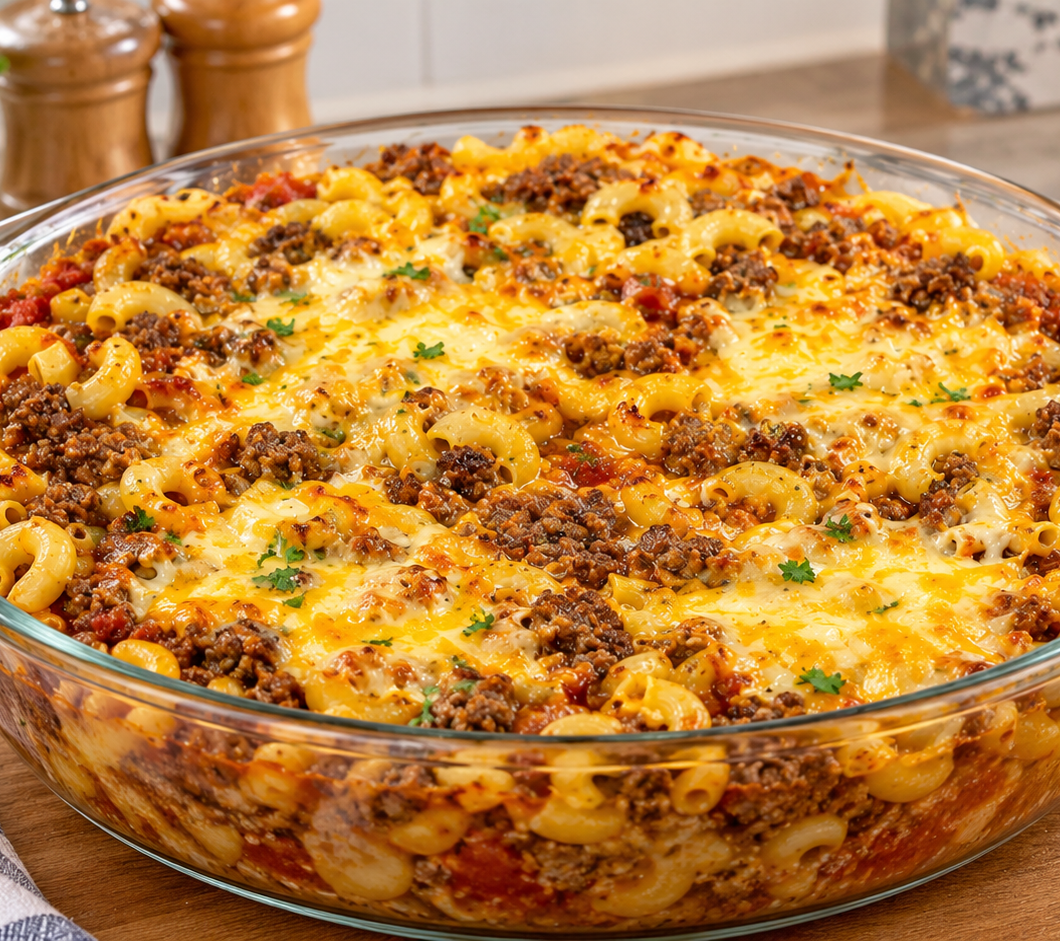
High Protein Beef Macaroni
A hearty slow cooker beef macaroni made with lean ground beef, elbow pasta, tomatoes, beef broth, Italian seasoning, and melted cheddar cheese. Each approximate serving provides 31 grams of protein.
6
servings15
minutes3
hours485
kcal3
hours15
minutesIngredients
1 pound (450 g) lean ground beef, 85/15 or 90/10
1 small onion, finely diced
2 garlic cloves, minced
1 can (14.5 oz / 410 g) diced tomatoes, with juices
1 can (15 oz / 425 g) tomato sauce, optional
2 cups beef broth
2 teaspoons Italian seasoning
Salt, to taste
Black pepper, to taste
2 cups uncooked elbow macaroni
2 cups shredded cheddar cheese, divided
- Optional for Serving
Grated Parmesan cheese
Chopped fresh parsley
Extra shredded cheddar cheese
Directions
- Brown Beef
Cook beef, onion, and garlic over medium heat until browned. Drain excess fat. - Fill Slow Cooker
Add beef mixture, tomatoes, optional tomato sauce, broth, seasoning, salt, pepper, and macaroni. Stir well. - Slow Cook
Cover and cook on LOW for 3–4 hours or HIGH for 2–3 hours. Check pasta near the minimum time. - Add Cheese
Stir in 1½ cups cheddar. Sprinkle the remaining ½ cup over the top. - Melt
Cover and rest for about 10 minutes until the cheese melts. - Serve
Serve hot with optional Parmesan, parsley, or extra cheddar.
Nutrition Facts
6 servings per container
- Amount Per ServingCalories485
- % Daily Value *
- Total Fat
26g
34%
- Total Carbohydrate
29g
11%
- Protein 31g 62%
* The % Daily Value tells you how much a nutrient in a serving of food contributes to a daily diet. 2,000 calories a day is used for general nutrition advice.