High Protein Bagels are an easy way to enjoy soft, chewy homemade bagels without yeast, lengthy proofing, or complicated bread-making techniques. Made primarily with all-purpose flour and protein-rich Greek yogurt, these quick air fryer bagels have a tender interior and lightly golden exterior. The recipe also includes an extra-protein option using unflavored protein powder, making it easy to choose the version that best suits your needs.
Unlike traditional homemade bagels that can require several hours from mixing to baking, these Greek yogurt bagels come together quickly. Baking powder provides the lift normally achieved through yeast fermentation, while thick nonfat Greek yogurt adds moisture and helps form the dough. After shaping, the bagels are brushed with egg, topped with your favorite seasoning, and cooked in the air fryer until golden. The straightforward method makes them suitable even for people with limited bread-making experience.
Why These Bagels Are Worth Making
One of the biggest advantages of homemade protein bagels is convenience. Traditional bagels usually involve preparing yeast dough, allowing it to rise, shaping it, and often boiling it before baking. This recipe removes many of those time-consuming stages. There is no yeast and no proofing period, making it much easier to prepare fresh bagels when you do not have several hours available.
The recipe is also flexible because it provides two ingredient options. The original Greek yogurt bagels contain approximately 12 grams of protein per bagel, while the extra-protein version contains approximately 19 grams per bagel according to the supplied recipe. The preparation and cooking method remains the same for both versions, so you can choose either one without changing the basic technique.
Greek Yogurt Creates a Soft Bagel Dough
Plain nonfat Greek yogurt is one of the most important ingredients in these homemade high-protein bagels. Both versions use 180 grams, or approximately two-thirds of a cup. Its thick consistency provides the moisture needed to bring the flour mixture together while also contributing protein.
Greek yogurt works especially well because it is generally thicker than regular yogurt. The dough needs enough moisture to become soft and workable, but too much liquid would make shaping difficult. Once combined with flour and baking powder, the yogurt helps produce a simple dough that can be shaped almost immediately rather than waiting for yeast to activate and rise.
Two High-Protein Bagel Options
The extra-protein version uses 150 grams of all-purpose flour, 30 grams of unflavored protein powder, 180 grams of plain nonfat Greek yogurt, two teaspoons of baking powder, half a teaspoon of salt, one egg for the egg wash, and seasoning of your choice. According to the original recipe, this version provides approximately 19 grams of protein per bagel.
The original version leaves out the protein powder and instead uses 180 grams of all-purpose flour. All the other ingredients remain the same: 180 grams of plain nonfat Greek yogurt, two teaspoons of baking powder, half a teaspoon of salt, one egg, and your preferred seasoning. This version provides approximately 12 grams of protein per bagel.
Why Unflavored Protein Powder Works Well
The extra-protein version includes one scoop, or 30 grams, of unflavored protein powder. Using an unflavored variety is important because these bagels are designed to work with many different toppings. A strongly flavored powder could make savory combinations less appealing.
Protein powder also changes the dry ingredient balance, which is why the extra-protein recipe uses 150 grams of flour rather than the 180 grams required in the original version. Follow the measurements for whichever version you select rather than adding protein powder to the original quantities, as that would change the intended dough proportions.
All-Purpose or Self-Rising Flour
The recipe allows either all-purpose flour or self-rising flour. If you choose all-purpose flour, include the two teaspoons of baking powder listed in the ingredients. If using self-rising flour, omit the baking powder because the flour already contains a leavening component.
This distinction is important because the recipe does not use yeast. Baking powder provides the lift that helps the bagels develop a softer interior instead of becoming overly dense. Using self-rising flour while also adding the full quantity of baking powder could alter the intended texture, so follow the adjustment specified in the original recipe.
No Yeast and No Proofing Required
One of the reasons these easy air fryer bagels are so convenient is that they skip yeast entirely. There is no need to activate yeast, wait for the dough to double in size, or carefully monitor a warm proofing environment.
Once the flour, baking powder, salt, Greek yogurt, and optional protein powder have been mixed, the dough can move directly into portioning and shaping. This makes the recipe particularly practical for breakfast or meal preparation when traditional bread-making would take too long. The simplified technique also removes one of the stages that beginner bakers often find intimidating.
How to Mix High Protein Bagel Dough
Begin by placing the dry ingredients into a large mixing bowl. For the extra-protein version, combine the flour, protein powder, baking powder, and salt. For the original version, combine the flour, baking powder, and salt.
Stir the dry ingredients thoroughly before adding the Greek yogurt. This distributes the baking powder and salt more evenly through the flour. Once the Greek yogurt is added, begin mixing with a silicone spatula. As the mixture starts coming together, use your hands to form it into a soft dough.
Getting the Dough Consistency Right
The finished bagel dough should be soft enough to shape while still holding together. Because Greek yogurt brands can differ slightly in thickness, the feel of the dough may not be exactly identical every time. However, the recipe does not call for altering the core ingredient quantities.
Transfer the prepared dough onto a lightly floured work surface. A small amount of flour on the surface helps prevent sticking while you portion and shape the bagels. Avoid unnecessarily working large amounts of additional flour into the dough, as maintaining the intended ingredient balance helps preserve its soft texture.
Dividing the Dough Evenly
Divide the prepared dough into three equal portions. If you want bagels that are especially consistent in size, weigh the entire dough and divide the weight by three. A kitchen scale is helpful but not essential; dividing the dough visually is perfectly acceptable for everyday home cooking.
Keeping the portions reasonably similar helps the three bagels cook at approximately the same rate. If one is significantly larger than the others, its center may need longer to set. Uniform portions also create a more attractive batch and make the approximate nutritional information per bagel more meaningful.
Brief Kneading for a Better Texture
After dividing the dough, gently knead each portion for approximately 30 seconds. This brief kneading smooths the dough and makes it easier to roll into a rope for shaping.
There is no need for the extended kneading commonly associated with yeast breads. In fact, the original instructions specifically advise avoiding excessive kneading to keep the finished bagels soft. Work each portion just long enough to create a smoother surface, then proceed directly to shaping.
How to Shape Homemade Protein Bagels
Roll each dough portion between your palms until it forms a long rope. Bring the two ends together to create a circle, then pinch the seam firmly. A secure seam is important because the dough expands as it cooks and a poorly joined bagel may open in the air fryer.
The bagels do not need to look perfectly identical. The main goal is to create reasonably even rings with openings in the centers. Since this dough requires no proofing after shaping, the prepared bagels can proceed directly to the air fryer once it has been preheated.
Why Air Fryer Protein Bagels Cook Quickly
Air fryers circulate heated air rapidly around food, which works particularly well for small bread items such as these bagels. The hot moving air cooks the exterior efficiently while the relatively small bagels cook through in approximately 10 minutes.
The air fryer also creates an attractive golden surface without requiring a long oven baking period. Since this recipe produces only three bagels, the compact air fryer basket is particularly convenient. Just make sure the bagels have enough room around them for the hot air to circulate.
Preheating the Air Fryer
Preheat the air fryer to 350°F or 175°C for approximately three minutes. Although the preheating period is short, it means the shaped dough begins cooking at the intended temperature as soon as it enters the basket.
Starting in a cold air fryer could change the effective cooking time and browning. Since the recipe cooks for only 10 minutes, those first few minutes can make a noticeable difference. Preheating also helps create a more consistent result from one batch to another.
Why Egg Wash Is Important
After placing the shaped bagels in the preheated air fryer basket, lightly brush their tops with beaten egg. The egg wash encourages a glossy, golden exterior while also creating a slightly tacky surface that helps the seasoning stay in place.
You only need a light coating. The goal is not to saturate the dough but to cover the exposed surface evenly. Once brushed, the bagels are ready for your chosen seasoning. This simple step gives homemade air fryer bagels a more polished, bakery-style appearance.
Choosing Your Bagel Seasoning
The recipe intentionally leaves the seasoning open to preference. Suggested options include everything bagel seasoning, sesame seeds, poppy seeds, garlic seasoning, onion flakes, and coarse salt. Because seasoning is listed as an ingredient of your choice, you can select the topping that best suits how you plan to serve the bagels.
A savory seasoning works particularly well when the bagels will be used for sandwiches or served with cream cheese. Keeping them relatively plain makes them more adaptable when you want to use sweet spreads after cooking.
Air Frying High Protein Bagels
Cook the bagels at 350°F or 175°C for 10 minutes. After eight minutes, carefully flip each bagel and continue cooking for the remaining two minutes. Flipping near the end helps lightly brown the bottom surfaces rather than leaving them pale.
Air fryers vary slightly in power and basket design, so appearance is useful alongside timing. The finished bagels should have a lightly golden exterior and should feel set rather than wet or doughy. Follow the specified 10-minute cooking time as the primary guide.
Why Cooling the Bagels Matters
Once cooked, transfer the bagels from the air fryer and let them cool for approximately 10 to 15 minutes before slicing. The cooling period may seem unnecessary when the bagels smell fresh and warm, but it plays an important role in the final texture.
Steam remains inside freshly cooked bread. Giving the bagels time to cool allows that moisture to redistribute and the interior structure to finish setting. Cutting immediately may make the center seem softer or more doughy than it will after a short rest.
Soft Inside and Lightly Golden Outside
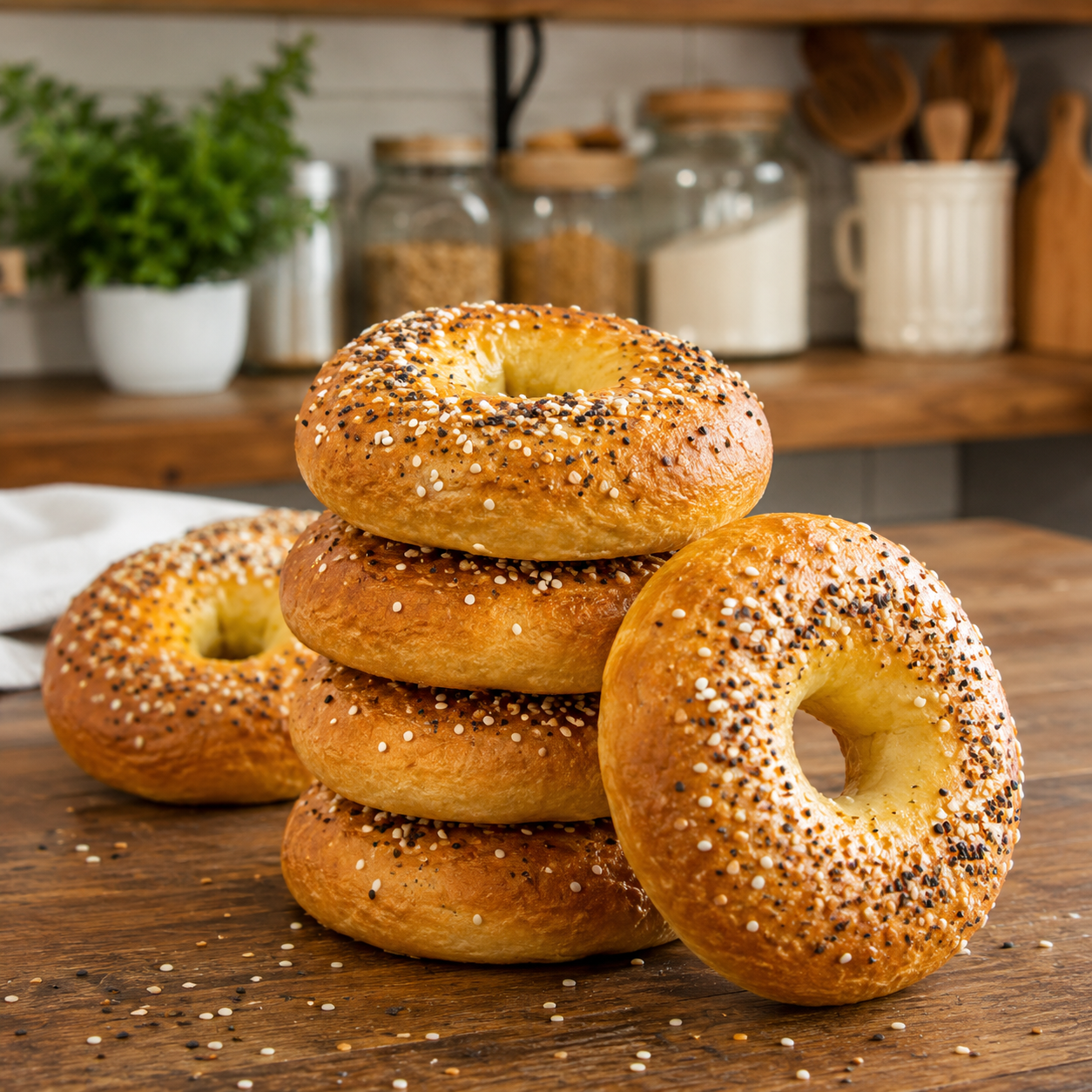
The combination of Greek yogurt, baking powder, controlled kneading, egg wash, and air frying produces the key texture of this recipe. The interior remains soft and pleasantly chewy, while the exterior develops a lightly crisp, golden finish.
These are quick Greek yogurt bagels rather than traditional boiled yeast bagels, so their exact texture will naturally differ from classic bakery bagels. Their appeal comes from achieving a satisfying homemade bagel-style result with a much shorter ingredient list and preparation process.
High Protein Bagels for Breakfast
For breakfast, these homemade protein bagels provide a versatile foundation for both sweet and savory toppings. They can be sliced and toasted after cooling or served without additional toasting when freshly prepared.
Cream cheese is a simple classic choice, while eggs, avocado, or cottage cheese can create a more substantial breakfast. Peanut butter, fruit preserves, sliced banana, or honey can move the flavor in a sweeter direction. Since the basic dough is mild, the same batch can be used for different breakfast combinations.
Using Protein Bagels for Lunch
These easy homemade bagels can also replace ordinary bread for sandwiches. Once completely cooled, slice a bagel horizontally and add your preferred sandwich fillings. Turkey, vegetables, cheese, eggs, or other familiar sandwich ingredients can turn a simple bagel into a convenient lunch.
The sturdy circular shape makes bagels particularly useful for packed meals. If preparing them ahead, keep wet fillings separate until close to serving so the cut surfaces do not become unnecessarily soft during storage.
A Convenient Post-Workout Option
The supplied recipe identifies these bagels as suitable for active lifestyles because they combine carbohydrates with protein from Greek yogurt and, in the extra-protein version, protein powder. The extra-protein version is listed at approximately 19 grams of protein per bagel, while the original provides approximately 12 grams.
The bagels are also portable and can be prepared ahead, which makes them convenient when you need something ready to eat later. Keep in mind that individual nutritional needs vary, so toppings and the rest of the meal can be selected according to your own dietary requirements.
High Protein Bagels for Meal Prep
Because this recipe makes three bagels, it is manageable for small-batch meal preparation. Once the bagels have cooled completely, store them properly and use them for breakfast, snacks, or sandwiches over the following days.
Preparing homemade bagels ahead can also save time during busy mornings. Instead of mixing and air frying a fresh batch every day, simply warm a previously cooked bagel in a toaster, oven, or air fryer. This can help restore some of the lightly crisp exterior while warming the soft center.
Storage Instructions
Store completely cooled protein bagels in an airtight container at room temperature for up to two days. For slightly longer storage, refrigerate them for up to five days. Make sure they are fully cool before sealing them in a container so excess trapped steam does not create unwanted moisture.
For longer storage, the original recipe recommends placing the cooled bagels in a freezer-safe bag or container and freezing them for up to three months. Thaw them at room temperature and warm them in a toaster, oven, or air fryer before serving.
Notes for the Best High Protein Bagels
Use the Correct Flour Measurements
The extra-protein version uses 150 grams of all-purpose flour because it also contains 30 grams of protein powder. The original version uses 180 grams of flour without protein powder. Do not combine the quantities from the two versions.
Omit Baking Powder with Self-Rising Flour
When using self-rising flour, leave out the two teaspoons of baking powder. When using regular all-purpose flour, include the baking powder as listed.
Avoid Over-Kneading
Knead each portion for only about 30 seconds. Extended kneading is unnecessary and may create a firmer texture than intended.
Seal the Bagel Ends Firmly
Pinch the ends of each dough rope securely so the rings remain closed while cooking.
Use the Egg Wash
A thin coating of beaten egg encourages golden browning and helps your chosen seasoning stick to the bagels.
Cool Before Slicing
Allow 10 to 15 minutes of cooling so the interior can finish setting before you cut the bagels.
Common Mistakes to Avoid
One mistake is confusing the ingredient quantities for the two versions. If you are making the extra-protein bagels, use the 150 grams of flour plus 30 grams of protein powder. If making the original version, use 180 grams of flour and no protein powder. Both versions use the same quantity of Greek yogurt.
Over-kneading is another unnecessary step. This dough needs only brief handling. Also remember to preheat the air fryer, securely pinch the dough ends together, flip the bagels after eight minutes, and allow enough cooling time before slicing.
Why This Recipe Works
The recipe works by replacing the lengthy yeast process with a simple Greek yogurt and baking powder dough. Flour supplies structure, Greek yogurt contributes moisture and protein, baking powder provides leavening, and salt improves flavor. In the extra-protein version, unflavored protein powder increases the protein content without requiring a different cooking method.
The egg wash adds color, chosen seasonings customize the exterior, and the air fryer provides quick cooking. Because the dough is divided into only three portions, each bagel cooks quickly enough to make the entire recipe practical even on a relatively busy day.
High Protein Bagels
Soft and chewy homemade high-protein bagels made with Greek yogurt and a simple no-yeast dough. Choose the original version or add unflavored protein powder for an extra-protein air fryer bagel.
3
servings15
minutes10
minutes240
kcal03
minutes15
minutes43
minutesIngredients
- Extra-Protein Version – Approximately 19 g Protein Per Bagel
150 g all-purpose flour (about 1¼ cups), or self-rising flour
30 g unflavored protein powder (1 scoop)
180 g plain nonfat Greek yogurt (about ⅔ cup)
2 teaspoons baking powder, omit with self-rising flour
½ teaspoon salt
1 egg, for egg wash
Seasoning of your choice
- Original Version – Approximately 12 g Protein Per Bagel
180 g all-purpose flour (about 1½ cups), or self-rising flour
180 g plain nonfat Greek yogurt (about ⅔ cup)
2 teaspoons baking powder, omit with self-rising flour
½ teaspoon salt
1 egg, for egg wash
Seasoning of your choice
Directions
- Mix Dry Ingredients
Combine flour, baking powder, salt, and protein powder if using. - Add Yogurt
Mix in Greek yogurt until a soft dough forms. - Divide
Place dough on a lightly floured surface and divide into 3 equal portions. - Knead
Gently knead each portion for about 30 seconds. - Shape
Roll each portion into a rope. Join and firmly pinch the ends. - Preheat
Preheat the air fryer to 350°F (175°C) for 3 minutes. - Add Egg Wash
Place bagels in the basket and lightly brush with beaten egg. - Season
Sprinkle with your preferred seasoning. - Air Fry
Cook at 350°F (175°C) for 10 minutes. Flip after 8 minutes and cook for 2 more minutes. - Cool
Cool for 10–15 minutes before slicing.