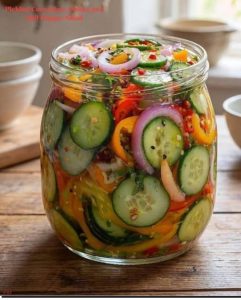
This anti-inflammatory cucumber pickle is a bright, crunchy, tangy homemade pickle made with fresh cucumbers, vinegar, garlic, ginger, turmeric, herbs, and warming spices. It is easy to prepare, requires no complicated equipment, and can be served alongside rice, grilled chicken, sandwiches, wraps, eggs, or almost any savory meal. The combination of crisp cucumber, acidic vinegar, aromatic ginger and garlic, turmeric, and fresh herbs creates a pickle that is flavorful, refreshing, and pleasantly sharp.
It is important to note that no pickle can cure inflammation or replace medical treatment. However, cucumbers, ginger, garlic, turmeric, herbs, and other plant foods can contribute useful nutrients and antioxidant compounds to an overall balanced diet. This recipe is designed as a flavorful food rather than a medical remedy.
Preparation Time
Prep Time: 20 minutes
Salting Time: 30–45 minutes
Pickling Time: At least 2 hours
Best Flavor: 24 hours
Total Time: About 3 hours for a ready-to-eat pickle, although overnight chilling is recommended
Servings: About 8–10 small servings
Ingredients
4 medium fresh cucumbers, preferably firm and crisp
1 teaspoon salt, plus additional salt if needed
1/2 medium red onion, very thinly sliced
3 cloves garlic, finely sliced or minced
1 tablespoon fresh ginger, finely grated
1/2 teaspoon ground turmeric
1/2 teaspoon freshly ground black pepper
1 teaspoon mustard seeds
1/2 teaspoon coriander seeds
1/4 teaspoon red chili flakes, optional
1 tablespoon fresh dill, chopped
1 tablespoon fresh cilantro, chopped
1 cup apple cider vinegar
1/2 cup water
1 tablespoon extra-virgin olive oil, optional
1–2 teaspoons honey or maple syrup, optional
1 tablespoon fresh lemon juice
1/2 teaspoon sesame seeds, optional
Choosing the Cucumbers
The cucumbers make the biggest difference in the texture of this recipe. Choose cucumbers that feel firm when gently pressed. Avoid cucumbers that are soft, wrinkled, or have large watery seeds.
Persian, English, garden, or small pickling cucumbers can all work well. English cucumbers are particularly convenient because they usually have thin skins and relatively small seeds. If using large garden cucumbers, you can cut them lengthwise and remove some of the watery center before slicing.
The goal is to create pieces that remain crunchy after soaking in the vinegar mixture.
Preparing the Cucumbers
Wash the cucumbers thoroughly under cool running water. Dry them well with a clean kitchen towel.
Trim off both ends. Slice the cucumbers into thin rounds, half-moons, or spears depending on how you want to serve the pickle.
For a traditional pickle texture, slices around 3–5 mm thick work very well. Very thin slices absorb the pickling liquid quickly but become softer. Slightly thicker pieces stay crunchier.
Place the sliced cucumbers in a large bowl and sprinkle them with 1 teaspoon salt. Toss gently so the salt is distributed evenly.
Allow the cucumbers to sit for approximately 30–45 minutes. This draws out excess water and helps the finished pickle remain crisp.
After the salting period, drain the liquid that has collected in the bowl. You can briefly rinse the cucumbers if you prefer a less salty pickle. If you rinse them, drain them thoroughly and gently pat them dry.
Do not squeeze the cucumbers aggressively because that can damage their texture.
Preparing the Pickling Mixture
In a small saucepan, combine the apple cider vinegar and water.
Add the grated ginger, sliced garlic, turmeric, black pepper, mustard seeds, coriander seeds, and red chili flakes if using.
Warm the mixture over medium-low heat.
You do not need to boil it vigorously. Simply heat it until it becomes hot and aromatic, allowing the spices and aromatics to release their flavors.
Once heated, remove the saucepan from the stove.
Let the mixture cool for several minutes.
If using honey or maple syrup, stir it into the warm mixture so that it dissolves easily. The sweetener is optional. It is mainly there to balance the sharpness of the vinegar.
Add the lemon juice after the mixture has cooled slightly.
Why Ginger Is Included
Fresh ginger gives the pickle a warm, spicy, aromatic flavor. Ginger contains naturally occurring compounds such as gingerols, which have been studied for their antioxidant and anti-inflammatory properties.
The amount in this recipe is enough to provide flavor without making the pickle overwhelmingly spicy.
Fresh ginger is preferable because it has a brighter aroma than dried ginger powder, although a small amount of ground ginger can be used if fresh ginger is unavailable.
Why Turmeric Is Included
Turmeric provides the beautiful golden color of this pickle and adds an earthy, slightly peppery flavor.
Turmeric contains curcumin, a naturally occurring compound that has been widely studied for its potential anti-inflammatory and antioxidant activity. Culinary turmeric is not equivalent to a concentrated curcumin supplement, but incorporating turmeric into meals is an easy way to add variety and flavor.
Black pepper is included because piperine, a compound in black pepper, may increase the absorption of curcumin. The combination also tastes especially good in a tangy pickle.
Adding the Vegetables
Place the prepared cucumbers into a clean glass jar or food-safe container.
Add the thinly sliced red onion.
Sprinkle in the chopped dill and cilantro.
If using sesame seeds, add them at this stage or reserve them for serving.
Pour the warm but not boiling pickling liquid over the cucumbers.
The vegetables should be mostly submerged.
Use a clean spoon to gently press the cucumbers down into the liquid.
If necessary, add a little additional vinegar and water to ensure the vegetables are covered.
Do not tightly seal the jar while the mixture is still hot. Allow it to cool first.
Once cooled to room temperature, cover the container and refrigerate.
The Pickling Process
The cucumber pickle can technically be eaten after about two hours, but the flavor improves considerably after sitting overnight.
During the first few hours, the vinegar begins penetrating the cucumber. As the pickle rests, the ginger, garlic, turmeric, mustard seeds, coriander, herbs, and other seasonings become more pronounced.
After approximately 24 hours, you should have a more balanced flavor with crisp cucumber, tangy vinegar, warm spices, and fresh herbs.
For an even stronger flavor, allow the pickle to rest for 48 hours.
Because this is a refrigerator pickle rather than a commercially canned shelf-stable pickle, keep it refrigerated.
Adding Olive Oil
The tablespoon of olive oil is optional.
For a lighter, sharper pickle, leave it out.
For a more rounded flavor, add a small amount after the pickling mixture has cooled.
Extra-virgin olive oil contributes a fruity flavor and pairs beautifully with vinegar, garlic, herbs, and cucumber.
Because oil can affect the storage characteristics of refrigerated pickles, use only a small amount and keep the finished pickle refrigerated.
Flavor and Texture
A good cucumber pickle should taste bright and refreshing.
The first flavor should be the tang of vinegar, followed by the cool cucumber, garlic, ginger, herbs, and warm spices.
The turmeric adds an earthy background flavor rather than dominating the pickle.
The cucumber should remain crisp enough to provide a pleasant crunch.
If your cucumbers become too soft, the most common causes are very thin slicing, over-salting, prolonged soaking at room temperature, or using cucumbers that were already soft.
Making It More Spicy
If you enjoy spicy pickles, increase the red chili flakes to 1/2 teaspoon or add a thinly sliced fresh chili.
Jalapeño, serrano, Thai chili, or another fresh pepper can be used.
For a milder pickle, omit the chili completely.
You can also add a small amount of crushed black pepper for a gentle peppery warmth.
Making a Garlic-Forward Version
For stronger garlic flavor, increase the garlic from 3 cloves to 5 or 6 cloves.
Thinly sliced garlic gives a different flavor from minced garlic. Sliced garlic produces small aromatic pieces that can be eaten directly with the cucumber.
Minced garlic distributes its flavor more evenly throughout the liquid.
If you love garlic, using a mixture of sliced and minced garlic creates a particularly flavorful pickle.
Making a Ginger-Forward Version
For a stronger ginger flavor, increase fresh ginger to 2 tablespoons.
Slice some ginger into thin matchsticks instead of grating all of it.
The grated ginger disperses throughout the liquid while the matchsticks provide little bursts of fresh ginger flavor.
Adding Other Vegetables
This recipe can easily become a mixed refrigerator pickle.
Thinly sliced carrots, radishes, bell peppers, cabbage, or cauliflower can be added.
Carrots provide sweetness and crunch.
Radishes add a peppery bite.
Red cabbage gives the pickle a vibrant color.
Thinly sliced bell peppers add sweetness without making the pickle too strong.
Keep the cucumber as the main ingredient if you want the characteristic cucumber-pickle flavor.
Adding Fresh Herbs
Dill is a natural pairing with cucumber and gives the pickle a classic pickle aroma.
Cilantro creates a fresher, more vibrant flavor.
Parsley can be substituted for cilantro if preferred.
Fresh mint can also be added in a small amount for a cooling flavor, although too much mint can overpower the other ingredients.
For a more traditional dill pickle profile, use extra dill and skip the cilantro.
Vinegar Choices
Apple cider vinegar gives the pickle a slightly fruity and mellow acidity.
White vinegar produces a sharper and cleaner flavor.
Rice vinegar creates a softer, more delicate pickle.
For a more complex flavor, you can use a combination of apple cider vinegar and white vinegar.
Avoid using flavored vinegars that contain lots of added sugar unless you intentionally want a sweeter pickle.
Sweet and Tangy Version
If you prefer a sweet pickle, add 1 tablespoon honey or maple syrup.
Taste the cooled pickling liquid before adding it to the cucumbers.
If it tastes too sharp, another teaspoon of sweetener can be added.
Do not make it overly sweet because the goal is a balanced pickle rather than a dessert-like relish.
How to Serve It
These pickled cucumbers are extremely versatile.
Serve them beside grilled chicken for a bright contrast to the savory meat.
Add them to sandwiches and burgers for crunch.
Use them inside wraps with chicken, turkey, eggs, or roasted vegetables.
Serve them alongside rice dishes, lentils, beans, or grilled fish.
They are also excellent with boiled eggs.
A few slices can be added to a grain bowl with brown rice, quinoa, chickpeas, cucumber, tomatoes, greens, and a simple yogurt sauce.
You can also chop them finely and mix them into a salad.
Pickle Yogurt Bowl
One easy serving idea is to combine chopped pickled cucumber with plain Greek yogurt.
Add a little dill, black pepper, and lemon juice.
The result is a cool, tangy side dish that works particularly well with grilled meats, rice, roasted vegetables, and flatbreads.
Do not add too much pickle liquid to the yogurt because it can make the mixture watery.
Pickle Salad
For a simple salad, combine the pickled cucumbers with fresh lettuce, tomatoes, red onion, parsley, and chickpeas.
Add a spoonful of the pickle liquid as a dressing.
You can finish it with olive oil and freshly ground black pepper.
Because the pickle liquid already contains vinegar and seasoning, you may not need additional salt.
Pickled Cucumber Sandwich
Spread hummus or cream cheese on whole-grain bread.
Add lettuce, sliced tomato, avocado, and several pieces of pickled cucumber.
The acidity of the cucumber helps balance creamy ingredients.
For additional protein, add boiled egg, grilled chicken, tuna, or turkey.
Storage
Keep the finished pickle refrigerated at all times.
Use a clean utensil whenever removing cucumbers from the container.
Do not leave the jar sitting at room temperature for extended periods.
Because this is a refrigerator pickle and not a tested shelf-stable canning recipe, it should not be stored in a pantry.
For best quality, use it within about 1–2 weeks and discard it earlier if you notice mold, unusual discoloration, an unpleasant odor, excessive bubbling, or other signs of spoilage.
When in doubt, throw it away.
Important Food Safety Note
This recipe is intended as a refrigerated quick pickle.
It is not designed for room-temperature storage or long-term canning.
Do not seal the jar and store it in a cupboard as you would commercially canned pickles.
If you want to make a shelf-stable canned pickle, use a tested canning recipe with verified acidity, processing time, and jar-handling instructions rather than improvising the proportions.
Tips for Extra-Crisp Cucumbers
Start with very fresh cucumbers.
Keep them refrigerated before preparing the recipe.
Avoid overcooking the pickling liquid.
Do not pour boiling liquid over delicate cucumber slices.
Salt the cucumbers briefly before pickling to remove some excess moisture.
Cut the cucumbers slightly thicker if you prefer a firm crunch.
Keep the finished pickle cold.
Do not repeatedly leave the jar out on the counter and return it to the refrigerator.
Common Mistakes
One common mistake is using too much salt. The cucumbers already absorb salt during the initial resting period, so taste before adding additional salt to the pickling liquid.
Another mistake is using too much turmeric. Turmeric is powerful in both color and flavor, and a little is enough.
Using old cucumbers can also lead to a disappointing texture.
Another problem occurs when the pickles are left at room temperature for too long. Refrigerator pickles should be treated as refrigerated food.
Finally, do not expect the flavor to be fully developed immediately. The pickle becomes much better after several hours, particularly overnight.
Nutrition Notes
Cucumbers are naturally high in water and provide small amounts of vitamin K and other nutrients.
Garlic provides various sulfur-containing plant compounds.
Ginger contributes naturally occurring gingerols and aromatic compounds.
Turmeric contains curcuminoids, including curcumin.
Fresh herbs add flavor along with small amounts of vitamins, minerals, and plant compounds.
Apple cider vinegar contributes acidity and flavor but should not be viewed as a cure or treatment for inflammation.
The overall nutritional value of the meal depends on what you serve with the pickle. Pairing it with vegetables, legumes, whole grains, lean proteins, nuts, seeds, or other minimally processed foods can make it part of a balanced eating pattern.
Can You Drink the Pickling Liquid?
A small amount of the pickle liquid can be used as a dressing or added to salads.
It is very acidic and salty, so it is not necessary or advisable to consume large quantities.
Instead of drinking the liquid as a health remedy, use it as a flavorful ingredient in food.
A spoonful can be whisked into olive oil to make a quick salad dressing.
Can This Pickle Reduce Inflammation?
The ingredients used in this recipe contain compounds that have been studied for antioxidant or anti-inflammatory activity, especially ginger, garlic, turmeric, and plant-based foods.
However, eating this pickle should not be presented as a guaranteed way to reduce inflammation.
Chronic inflammation can have many causes, and dietary changes should be considered as part of an overall healthy lifestyle rather than a single-food treatment.
If you have a medical condition or take medication that requires dietary restrictions, discuss significant dietary changes with a qualified healthcare professional.
Quick Recipe Card
Description
Crisp refrigerator cucumber pickles made with apple cider vinegar, ginger, garlic, turmeric, black pepper, mustard seeds, fresh herbs, and lemon. They are tangy, crunchy, aromatic, and easy to prepare.
Duration
Preparation: 20 minutes
Salting: 30–45 minutes
Minimum Pickling: 2 hours
Best Flavor: Overnight
Storage: Refrigerated, preferably within 1–2 weeks
Ingredients
4 medium cucumbers
1 teaspoon salt
1/2 red onion
3 garlic cloves
1 tablespoon fresh ginger
1/2 teaspoon turmeric
1/2 teaspoon black pepper
1 teaspoon mustard seeds
1/2 teaspoon coriander seeds
1/4 teaspoon red chili flakes
1 tablespoon fresh dill
1 tablespoon fresh cilantro
1 cup apple cider vinegar
1/2 cup water
1 tablespoon olive oil, optional
1–2 teaspoons honey or maple syrup, optional
1 tablespoon lemon juice
1/2 teaspoon sesame seeds, optional
Instructions
Wash and slice the cucumbers. Toss them with 1 teaspoon salt and let them sit for 30–45 minutes. Drain well and lightly rinse if desired.
Combine apple cider vinegar, water, garlic, ginger, turmeric, black pepper, mustard seeds, coriander seeds, and chili flakes in a saucepan. Warm gently until aromatic, then remove from the heat.
Stir in honey or maple syrup if using. Allow the mixture to cool slightly, then add lemon juice.
Place cucumbers, red onion, dill, and cilantro in a clean glass container. Pour the pickling mixture over the vegetables and make sure they are mostly submerged.
Allow the mixture to cool completely, cover, and refrigerate.
Enjoy after at least 2 hours, although the flavor is best after resting overnight.
Keep refrigerated and use clean utensils each time you serve the pickle.