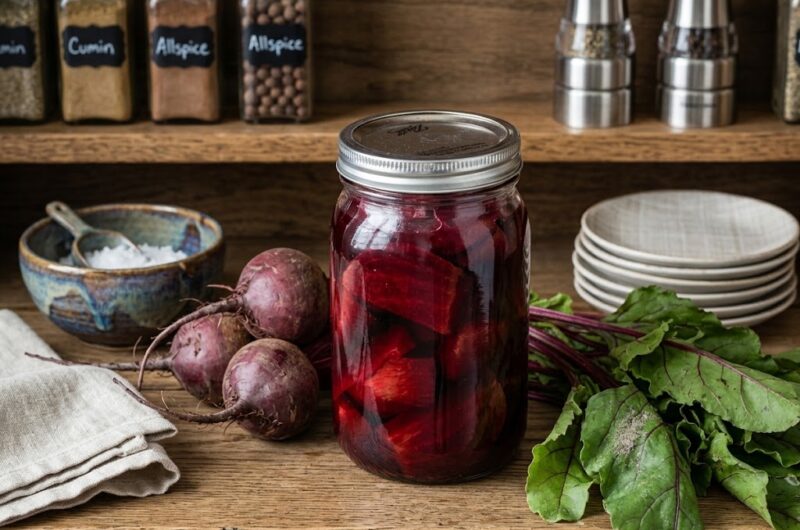
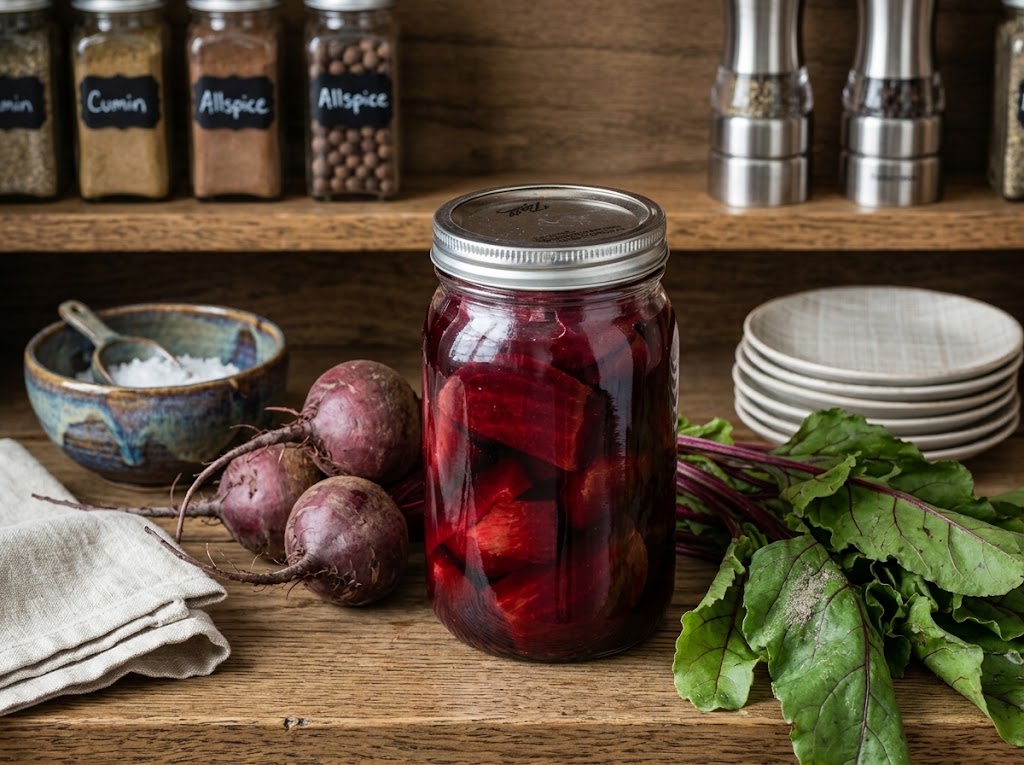
Healthy Pickled Beets are a colorful, sweet-and-tangy refrigerator side dish made with fresh beets, white vinegar, sugar, garlic, whole black peppercorns, and bay leaves. The beets are first cooked until tender, then peeled, sliced, and covered with a warm homemade pickling brine. After chilling in the refrigerator, they develop a bright, refreshing flavor that works beautifully as a side dish, salad topping, snack, or addition to sandwiches and grain bowls.
Unlike shelf-stable canned pickles, these easy refrigerator pickled beets do not require a traditional canning process. Once the cooked beets are covered with the vinegar brine, they are cooled and stored in the refrigerator. They can be eaten after 24 hours, although allowing them to pickle for two to three days produces a more developed flavor. This simple method makes homemade pickled beets approachable even for cooks who have never prepared pickled vegetables before.
Why This Recipe Works
- One of the best qualities of homemade pickled beets is their balance of earthy, sweet, acidic, and savory flavors. Fresh beets have a naturally distinctive sweetness that pairs especially well with vinegar. Sugar softens the sharp acidity of the brine, while garlic, peppercorns, and bay leaves provide additional layers of flavor without overwhelming the taste of the vegetables.
- This recipe is also convenient for meal preparation. Once a batch is refrigerated, the beets can be used in different meals throughout the week. Add a few slices to a green salad, spoon them into a grain bowl, serve them beside a main course, or enjoy them cold as a simple snack. Their vivid red color can instantly make an everyday plate more attractive.
What Makes Refrigerator Pickled Beets Different?
- Refrigerator pickled beets are designed to remain refrigerated rather than being processed for shelf-stable storage. The cooked vegetables are placed in a clean glass jar or another suitable non-reactive container, covered completely with the prepared vinegar brine, cooled, sealed, and refrigerated. This approach eliminates the additional processing involved in conventional shelf-stable canning.
- Because this is a refrigerator recipe, proper cold storage remains important throughout the storage period. The finished beets should stay submerged in their pickling liquid as much as possible and should be removed using a clean utensil. According to the provided recipe, they can be kept refrigerated for up to three weeks.
Choosing the Best Fresh Beets
- The quality of the fresh beets has a major influence on the finished texture. Choose firm vegetables that feel heavy for their size and do not have extensive soft, shriveled, or damaged areas. Medium-sized or smaller beets are particularly useful because they generally cook more evenly and can be easier to handle once they are tender.
- The recipe calls for two pounds of fresh beets, providing enough for approximately eight servings. Before cooking, wash them thoroughly under cool running water to remove soil and debris. Keep their skins intact during cooking rather than peeling them first. This helps protect the vegetables while they simmer and makes the skins easier to remove afterward.
Why You Should Cook Beets With the Skin On
- Leaving the skin intact while boiling the beets helps protect their flesh and preserve their natural moisture and vibrant appearance. Peeling raw beets is therefore unnecessary for this recipe. Once properly cooked and cooled slightly, their skins become much easier to remove, often rubbing away with very little effort.
- This approach also simplifies preparation. Instead of struggling with firm raw vegetables and a peeler, wash them thoroughly and cook them whole. When they are cool enough to handle safely, use your hands or a paper towel to gently rub away the loosened skin. A small knife can remove any stubborn areas that remain.
How to Cook Beets for Pickling
- Place the washed beets in a large pot and cover them completely with water. Bring the water to a boil over medium-high heat, then lower the temperature and maintain a gentle simmer. The recipe specifies approximately 35 to 45 minutes of cooking, although the exact duration will depend on the size of the individual beets.
- Instead of relying exclusively on the timer, check the vegetables with a fork. Properly cooked beets should be tender enough for a fork to enter without significant resistance but still firm enough to maintain their shape after slicing. Avoid cooking them until extremely soft because mushy beets can become difficult to peel, slice, and store attractively.
Cooling and Peeling Cooked Beets
- Drain the cooked beets and allow them to cool until they can be handled comfortably. The recipe estimates an initial cooling period of approximately 15 to 30 minutes. You do not need them to become completely cold before peeling; they simply need to be cool enough to handle safely.
- Rub the skins gently with your fingers or a paper towel. Properly cooked beet skins should slide away relatively easily. Be aware that beet juice can stain hands, cutting boards, and some kitchen surfaces. Wearing food-safe gloves during peeling and slicing is an optional way to reduce staining on your hands.
How to Slice Beets for Pickling
- After peeling, cut the beets into rounds, wedges, or cubes according to how you intend to serve them. Thin rounds create an attractive presentation and work particularly well in salads, while cubes are easy to spoon into grain bowls. Wedges make a substantial side dish and provide a slightly different texture.
- Whichever shape you select, try to make the pieces relatively uniform. Similar-sized pieces absorb the pickling liquid more consistently and make the finished jar easier to serve. Uniform slicing also gives the homemade pickled beets a neater appearance, particularly when they are being prepared for entertaining or a charcuterie board.
Making Homemade Pickling Brine
- The homemade beet pickling brine is straightforward. Combine one cup white vinegar, one cup water, half a cup sugar, one teaspoon salt, half a teaspoon whole black peppercorns, two thinly sliced garlic cloves, and two bay leaves in a small saucepan. These quantities should remain unchanged to preserve the original recipe.
- Heat the mixture over medium heat and stir occasionally until the sugar has completely dissolved. Bring the liquid to a gentle boil, then remove the saucepan from the heat. There is no need to boil the brine for an extended period. Once the sugar has dissolved and the mixture reaches a gentle boil, it is ready to pour over the prepared beets.
Why White Vinegar Works Well for Pickled Beets
- White vinegar gives these homemade pickled beets their characteristic bright acidity. Its clean, sharp flavor works well with the earthy sweetness of cooked beets without introducing too many competing flavors. Water is included in an equal quantity to soften the vinegar’s intensity, while sugar balances the overall acidity.
- The original recipe also identifies apple cider vinegar as an optional flavor variation when a milder and somewhat fruitier result is preferred. However, white vinegar remains the ingredient specified in the primary recipe. Keeping the original combination is the best approach when preparing this version for the first time.
The Role of Sugar in Pickled Beets
- Half a cup of sugar is used in the brine. Pickled beets traditionally work well with a sweet-and-sour profile because their natural earthy sweetness pairs with both sugar and vinegar. The sugar does not simply make the vegetables taste sweet; it also helps balance the sharpness of the white vinegar.
- Because the user’s supplied recipe specifically calls for half a cup, the quantity should not be changed when reproducing the original formula. If nutritional values are important, remember that the amount of brine actually consumed with each serving can influence the final sugar and calorie intake.
Garlic, Peppercorns, and Bay Leaves
- Two sliced garlic cloves, half a teaspoon of whole black peppercorns, and two bay leaves provide savory and aromatic notes. These ingredients gradually infuse the pickling liquid while the container rests in the refrigerator, contributing flavor without overpowering the beets themselves.
- Whole peppercorns are particularly suitable because they release flavor gradually rather than immediately creating the intensity of ground black pepper. Bay leaves contribute a subtle herbal character, while thin slices of garlic add a recognizable savory note. Distribute these ingredients throughout the jar so their flavor reaches the beet pieces more evenly.
Optional Onion for Extra Flavor
- The recipe includes one small sliced onion as an optional ingredient. Adding onion introduces another layer of texture along with mild sweetness and sharpness. Onion also absorbs the beet-colored pickling liquid, creating an attractive appearance inside the jar.
- If you decide to include it, distribute the onion slices among the prepared beet pieces rather than placing them all at the top. This allows onion and beet pieces to mingle throughout the container. Because onion is listed as optional, it can also be left out completely without changing the essential character of the recipe.
Filling the Pickling Jar
- Transfer the peeled and sliced beets to a clean glass jar or another non-reactive food-storage container. If using the optional sliced onion, distribute it among the beet pieces. Avoid packing everything so tightly that the pickling liquid cannot easily move around the vegetables.
- Carefully pour the warm brine over the beets. Make sure the vegetables are completely covered and distribute the garlic, peppercorns, and bay leaves throughout the container. Keeping the beet pieces submerged helps them absorb the pickling liquid more consistently while maintaining good quality during refrigerated storage.
Cooling Before Refrigeration
- Once the warm pickling liquid has been added, allow the container to cool completely at room temperature before sealing it and transferring it to the refrigerator. Do not begin serving the beets immediately because they need sufficient time in the brine for the characteristic pickled flavor to develop.
- The minimum refrigeration period specified in the recipe is 24 hours. At that point, the beets will have begun absorbing the sweet and tangy brine. However, allowing them to rest for two to three days provides a fuller, more integrated flavor.
Why Pickled Beets Taste Better After a Few Days
- Pickling is not an instant flavoring process. During refrigeration, the beet pieces gradually absorb acidity, sweetness, garlic, peppercorn, and bay leaf flavors from the surrounding liquid. After only a few hours, the center of thicker pieces may still taste more like plain cooked beet than a fully flavored pickle.
- After approximately two or three days, the different flavors have had more time to blend. The vinegar tastes less separate from the sugar and spices, while the beets develop a more consistent sweet-and-tangy character. For this reason, preparing the recipe several days before you plan to serve it can actually improve the result.
Texture of Perfect Pickled Beets
- Good refrigerator pickled beets should be tender but still retain their shape. They are not intended to have the hard crunch of raw pickled vegetables because the beets are fully cooked before entering the brine. However, they should not be so soft that they fall apart when removed from the jar.
- The key is stopping the initial cooking when the beets are fork-tender. If they are boiled far beyond this stage, no amount of careful slicing will restore their structure. Testing with a fork near the lower end of the cooking range is therefore one of the most important steps in the recipe.
Ways to Serve Healthy Pickled Beets
- Chilled pickled beets can be served directly from the refrigerator as a simple vegetable side dish. Their acidity pairs especially well with rich or savory foods because the tangy flavor provides contrast. Serve them alongside grilled chicken, roasted turkey, baked fish, or another favorite main course.
- They are equally useful as an ingredient. Add slices to leafy green salads, place cubes in grain bowls, or layer them into sandwiches and burgers. Their vivid color also makes them an attractive addition to a charcuterie board. When you want a quick snack, simply place a small portion of chilled beet slices in a bowl.
Pickled Beets for Salads
- Pickled beets are particularly well suited to salads because they provide several elements at once: color, sweetness, acidity, and soft texture. A few slices can transform a basic green salad without requiring another homemade dressing or cooked vegetable.
- Drain the amount you need before placing it over leafy greens so the salad does not become overwhelmed by pickling liquid. The bright beet color may naturally stain lighter ingredients, which is normal. For a visually layered presentation, add the beet pieces near the end instead of tossing them aggressively through the entire salad.
Pickled Beets for Meal Prep
- This easy refrigerator pickled beets recipe is convenient for meal preparation because one batch can be used in several different ways. Instead of preparing a new vegetable side every day, keep the jar refrigerated and remove the amount needed for a salad, grain bowl, sandwich, snack, or dinner side.
- Preparing fresh beets in advance can also be useful when you have purchased more than you expect to cook immediately. Once pickled, the vegetables are ready to serve without additional cooking. The provided recipe states that properly refrigerated pickled beets can be stored for up to three weeks.
Notes for the Best Pickled Beets
Choose Firm Beets
- Start with fresh, firm vegetables for the best finished texture. Medium or smaller beets generally cook more evenly than very large ones. Avoid beets with extensive soft areas or obvious signs of deterioration.
Do Not Peel Before Cooking
- Keep the skins intact while boiling. After cooking and cooling slightly, the skins should rub away much more easily. This technique also helps protect the beets during cooking.
Avoid Overcooking
- Cook the beets for approximately 35 to 45 minutes, checking them with a fork. Remove them once fork-tender rather than continuing to cook until extremely soft.
Keep the Beets Submerged
- After adding the pickling brine, make sure the beet pieces remain covered by liquid as much as possible. This supports consistent flavor and helps maintain quality during refrigerator storage.
Give Them Time to Pickle
- Although 24 hours is the minimum resting period, waiting two to three days generally produces a better-developed sweet-and-tangy flavor.
Common Mistakes to Avoid
- One common mistake is overcooking the fresh beets. When the vegetables become excessively soft, they can break apart while being peeled, sliced, or removed from the jar. Check them with a fork rather than assuming every beet requires exactly the same amount of cooking time.
- Another issue is rushing the pickling period. The beets may technically be ready after 24 hours, but their flavor improves as they continue resting. Using a reactive storage container should also be avoided because the recipe contains acidic vinegar. A clean glass jar or another suitable non-reactive food container is the preferred choice.
How Long Do Pickled Beets Last?
- According to the provided recipe, these refrigerator pickled beets can be stored in a tightly closed container in the refrigerator for up to three weeks. Keep the vegetables submerged in the brine as much as possible and always use a clean utensil when removing portions.
- Remember that this is a refrigerator pickle recipe rather than a shelf-stable canning recipe. The jar should remain refrigerated. Freezing is also not recommended because the freezing and thawing process can negatively affect the texture of both the cooked beets and optional onion.
Are Pickled Beets Healthy?
- Beets naturally provide dietary fiber, folate, potassium, vitamin C, and various plant compounds. Their distinctive deep color comes from naturally occurring pigments in the vegetable. The recipe contains no added fat, according to the provided nutritional estimate, although it does contain added sugar as part of the sweet-and-tangy pickling brine.
- Whether a food fits a particular definition of “healthy” depends on individual dietary needs and serving size. These pickled beets can certainly be included as part of a varied diet, particularly as a vegetable side dish. Anyone monitoring added sugar or sodium closely should take the brine ingredients and portion size into account.
Are These Pickled Beets Gluten-Free?
- Based on the listed ingredients—fresh beets, white vinegar, water, sugar, salt, whole black peppercorns, garlic, optional onion, and bay leaves—the recipe does not require any obvious gluten-containing ingredient. It can therefore fit naturally into a gluten-free recipe category when the individual packaged ingredients used are verified as appropriate.
- For people who need strict gluten avoidance, ingredient labels should still be checked for processing or cross-contact information. This is particularly relevant when purchasing packaged vinegar, spices, and other prepared products.
Healthy Pickled Beets
Easy refrigerator pickled beets with a sweet-and-tangy vinegar brine, garlic, peppercorns, and bay leaves. Colorful, flavorful, and ideal for salads, sides, sandwiches, or snacks.
8
servings15
minutes35
minutes95
kcal15
minutes1440
minutes25
hours5
minutesIngredients
2 pounds fresh beets
1 cup white vinegar
1 cup water
½ cup sugar
1 teaspoon salt
½ teaspoon whole black peppercorns
2 garlic cloves, thinly sliced
1 small onion, sliced (optional)
2 bay leaves
Directions
- Cook Beets
Wash beets and leave skins on. Cover with water and simmer for 35–45 minutes until fork-tender. - Peel and Slice
Cool slightly, rub off the skins, and cut into even rounds, wedges, or cubes. - Make Brine
Combine vinegar, water, sugar, salt, peppercorns, garlic, and bay leaves. Heat until sugar dissolves and bring to a gentle boil. - Fill Jar
Place beets and optional onion in a clean glass jar. - Add Brine
Pour warm brine over the beets until completely covered. - Cool
Let the container cool completely at room temperature. - Refrigerate
Seal and refrigerate for at least 24 hours. For better flavor, wait 2–3 days.