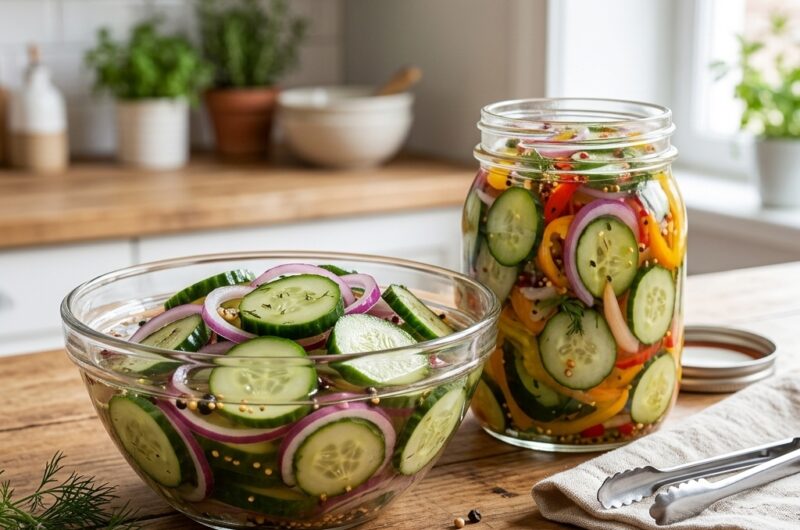
Anti-inflammatory pickled cucumbers are a refreshing homemade condiment prepared with crisp cucumbers, apple cider vinegar, garlic, fresh ginger, turmeric, aromatic spices, and garden herbs. This easy cucumber pickle recipe combines a bright, tangy flavor with a satisfying crunch, making it a delicious addition to everyday meals. Unlike complicated preservation recipes, this version uses simple kitchen ingredients and requires very little active preparation. After the cucumbers are salted and mixed with the seasoned vinegar, they need time in the refrigerator to develop their flavor.
One of the best things about this homemade cucumber pickle is its versatility. You can serve it with grilled chicken, rice dishes, sandwiches, wraps, eggs, roasted vegetables, or your favorite savory meals. The apple cider vinegar provides a sharp, fruity acidity, while ginger and garlic add a warm, savory aroma. Turmeric, black pepper, mustard seeds, and coriander seeds contribute earthy and slightly spicy notes that make every bite more interesting.
This recipe is also a convenient way to add vegetables and herbs to your meals. Cucumbers provide water and a refreshing texture, while garlic, ginger, turmeric, and fresh herbs contain naturally occurring plant compounds. Although these ingredients can be part of a balanced eating pattern, this pickle is not a medical treatment and cannot independently cure inflammation. Its main purpose is to offer a flavorful, homemade condiment that complements a varied and nutritious diet.
What Makes This Homemade Cucumber Pickle Special?
A good cucumber pickle should balance acidity, freshness, seasoning, and texture. This recipe brings those elements together without requiring a complicated cooking process. The cucumbers are salted before pickling, helping remove excess surface moisture and preparing them to absorb the vinegar mixture. Thinly sliced red onion adds mild sweetness and color, while the garlic and ginger create a fragrant base for the spices.
Apple cider vinegar is the main source of tanginess in this recipe. When combined with water, lemon juice, herbs, and spices, it creates a flavorful pickling liquid that coats the cucumber slices evenly. Fresh dill and cilantro bring a bright herbal finish, while mustard and coriander seeds add small bursts of aromatic flavor. Optional chili flakes introduce gentle heat, and a little honey or maple syrup can soften the sharpness of the vinegar.
Another appealing feature is that the recipe does not require a stovetop or special pickling equipment. You can prepare everything with an ordinary knife, cutting board, mixing bowl, measuring spoons, and a clean glass container. Refrigeration gives the ingredients time to blend, making the finished pickle taste more developed than it does immediately after mixing.
Ingredients for Anti-Inflammatory Pickled Cucumbers
The ingredients are simple, but each one contributes something different to the finished dish. Fresh cucumbers provide crunch, vinegar supplies acidity, and aromatics such as ginger and garlic deepen the flavor. The spices add complexity, while the herbs and lemon juice help keep the overall taste bright and refreshing.
Choose firm cucumbers whenever possible, and use fresh ginger, garlic, dill, and cilantro for the most aromatic result. The optional ingredients allow you to adjust the balance of sweetness, heat, and richness without changing the recipe’s basic character.
How to Choose the Best Cucumbers
The quality of the cucumbers has a major effect on the final texture. Look for cucumbers that feel firm when gently pressed, have relatively smooth skins, and show no obvious soft spots or deep wrinkles. Fresh cucumbers with firm flesh are more likely to retain a pleasant crunch during refrigeration. Avoid vegetables that feel unusually soft or have a large, watery seed cavity.
Persian, English, garden, and small pickling cucumbers can all be used successfully. English cucumbers are convenient because their skins are usually thin and their seeds are relatively small. Persian cucumbers are also suitable because of their compact size and firm texture. If you use large garden cucumbers, consider removing some of the watery center before slicing, especially when the seeds are mature.
The shape and thickness of your cucumber slices also matter. Thin rounds absorb the seasoned vinegar more quickly and are ideal for sandwiches, burgers, and wraps. Slightly thicker rounds or half-moons generally retain more bite and work well as a side dish. For a consistent result, cut the cucumbers into pieces of similar thickness so that they season evenly.
Why Salt the Cucumbers Before Pickling?
Salting is an important preparation step for crunchy refrigerator pickles. Cucumbers naturally contain a large amount of water, and drawing away some of that moisture can help prevent the finished mixture from becoming excessively watery. It also seasons the cucumber pieces before they are combined with the vinegar, garlic, ginger, and spices.
After slicing the cucumbers, toss them with one teaspoon of salt and allow them to rest for 30–45 minutes. During this time, moisture will collect around the slices. Drain the released liquid before adding the cucumbers to the pickling mixture. If you prefer a less salty result, you can briefly rinse the slices and pat them dry, although this may reduce some of the seasoning already absorbed.
The salting step should not be skipped if you want the recipe to follow its intended preparation method. However, avoid leaving the cucumbers unattended for an excessively long period, as prolonged salting can make thin slices softer. A short, controlled resting time helps prepare the cucumbers while preserving their fresh texture.
The Flavor Benefits of Ginger, Garlic, and Turmeric
Ginger brings a warm, slightly peppery flavor that complements the acidity of apple cider vinegar. Freshly grated ginger distributes its aroma throughout the pickling liquid more evenly than large pieces would. It pairs naturally with garlic, which adds a savory depth and helps balance the sharpness of the vinegar. Together, these ingredients create a fragrant base without requiring a long cooking process.
Turmeric contributes an earthy taste and a golden hue to the pickling liquid. It is widely used in different cuisines and contains curcumin, a naturally occurring plant compound studied for its biological properties. Black pepper provides a gentle bite and additional aromatic character. Although turmeric and ginger are often discussed in relation to inflammation, the amount used in a serving of this pickle should not be treated as a therapeutic dose.
Mustard seeds and coriander seeds round out the seasoning with their distinctive aromas. Mustard seeds contribute a mild pungency, while coriander seeds have a warm, citrus-like flavor. Red chili flakes are optional and can be omitted entirely if you prefer a milder pickle. This combination produces a layered flavor that is tangy, herbal, earthy, and slightly spicy without overpowering the cucumber itself.
How to Serve Pickled Cucumbers
Anti-inflammatory pickled cucumbers can make everyday meals taste brighter without requiring a separate cooked side dish. Their crisp texture and sharp flavor work particularly well with grilled chicken, baked fish, roasted vegetables, rice bowls, and simple egg dishes. A small serving can also add contrast to rich foods, including creamy sandwiches, burgers, and cheese-filled wraps. The acidity helps balance heavier flavors and makes the overall meal feel fresher.
For lunch, add the cucumber slices to a sandwich with lettuce, tomato, and your preferred protein. They are also delicious in wraps with grilled chicken or roasted vegetables. At dinner, serve them beside rice, lentils, roasted potatoes, or grilled meat. You can even chop a few slices and mix them into a grain bowl for a tangy finish. Since the pickling liquid contains herbs and spices, a small spoonful of the mixture can also add flavor to a serving bowl, provided it has been handled and stored safely.
If you enjoy spicy food, include the optional chili flakes and serve the pickles with a meal that benefits from extra heat. For a milder flavor, leave out the chili and reduce the amount of black pepper slightly. The optional honey or maple syrup can soften the acidity, but the pickle should remain noticeably tangy. These adjustments make it easy to serve the same basic recipe with different dishes.
Are Anti-Inflammatory Pickled Cucumbers Healthy?
Cucumbers are a water-rich vegetable that contributes to hydration and provides small amounts of nutrients. Ginger, garlic, turmeric, dill, and cilantro add flavor along with naturally occurring plant compounds. Including a variety of vegetables, herbs, and spices in regular meals can help support an overall balanced eating pattern. This pickle can therefore be a useful way to make vegetables more appealing, especially for people who enjoy tangy side dishes.
However, the term “anti-inflammatory” should be understood carefully. Although some ingredients in this recipe have been studied for their potential biological effects, a homemade pickle has not been established as a treatment for chronic inflammation, arthritis, digestive disorders, or any other medical condition. The quantity consumed, the wider diet, individual health circumstances, and other lifestyle factors all matter. This recipe is best enjoyed as food rather than as a remedy.
The salt used during preparation is another consideration. Some sodium remains on the cucumbers after salting, and additional salt may be present depending on whether you rinse them. People who have been advised to limit sodium should consider their portion size and overall dietary needs. Apple cider vinegar is acidic, so people who are sensitive to acidic foods may also prefer a smaller serving.
Storage Tips for Homemade Cucumber Pickles
Store the finished pickles in a clean, covered glass container in the refrigerator. Use a clean spoon or fork each time you serve them, and avoid returning food from your plate to the storage container. Keeping the vegetables chilled and handling them hygienically helps reduce contamination risks. Always inspect the pickles before eating, and discard them if you notice mold, unusual discoloration, unexpected bubbling, an unpleasant odor, or other signs of spoilage.
Because this is a quick refrigerator pickle rather than a tested canning recipe, no specific long-term storage period can be guaranteed. Prepare a manageable batch, keep it cold, and consume it promptly. Do not rely on the vinegar, salt, or spices to make the mixture safe at room temperature. If you need a shelf-stable pickle, use a tested canning recipe with validated ingredient proportions and processing instructions instead.
For the best texture, avoid repeatedly opening the container or leaving it out while preparing a meal. Refrigeration slows changes in texture, but cucumber slices will gradually soften as they sit in the liquid. The flavor is usually most developed after an overnight rest, so preparing the pickle a day before serving can be convenient for meal planning.
Notes and Frequently Asked Questions
Can I prepare these cucumber pickles in advance?
Yes. Preparing them a day before serving is a convenient way to develop a deeper flavor. The recommended minimum chilling time is two hours, but approximately 24 hours in the refrigerator gives the vinegar, garlic, ginger, herbs, and spices more time to mingle. Keep the container covered and refrigerated while the flavors develop.
Which vinegar works best for this recipe?
Apple cider vinegar is the specified choice because its fruity acidity pairs well with cucumber, ginger, and fresh herbs. If you want to preserve the recipe’s intended flavor, use the listed vinegar rather than changing the ingredient. Always use a food-grade vinegar, and remember that this refrigerator pickle is not a validated canning recipe.
Can I leave out the optional ingredients?
Yes. The honey or maple syrup, olive oil, red chili flakes, and sesame seeds are marked as optional in the ingredient list. You can omit them according to your taste. The remaining ingredients still provide the essential combination of cucumber, vinegar, aromatics, spices, and herbs.
Why are my pickled cucumbers soft?
Softness can result from using older cucumbers, cutting the slices too thin, or allowing the vegetables to sit for an extended period. Choose firm produce, use consistent slices, and follow the recommended salting time. Refrigeration helps slow texture changes, although it cannot keep cucumbers perfectly crisp indefinitely.
Can these pickles reduce inflammation?
No particular serving of this recipe can be guaranteed to reduce inflammation or treat a medical condition. Cucumbers, herbs, ginger, garlic, and turmeric can fit into a balanced diet, but the pickle should not replace prescribed medication or professional medical advice. Anyone managing a chronic condition should follow guidance from their healthcare professional.
What is the best way to enjoy this recipe?
Serve a small portion with grilled chicken, rice, eggs, sandwiches, wraps, roasted vegetables, or other savory foods. The tangy flavor works especially well alongside rich or mildly seasoned dishes. For a more developed taste, prepare the pickles the previous day and serve them chilled.
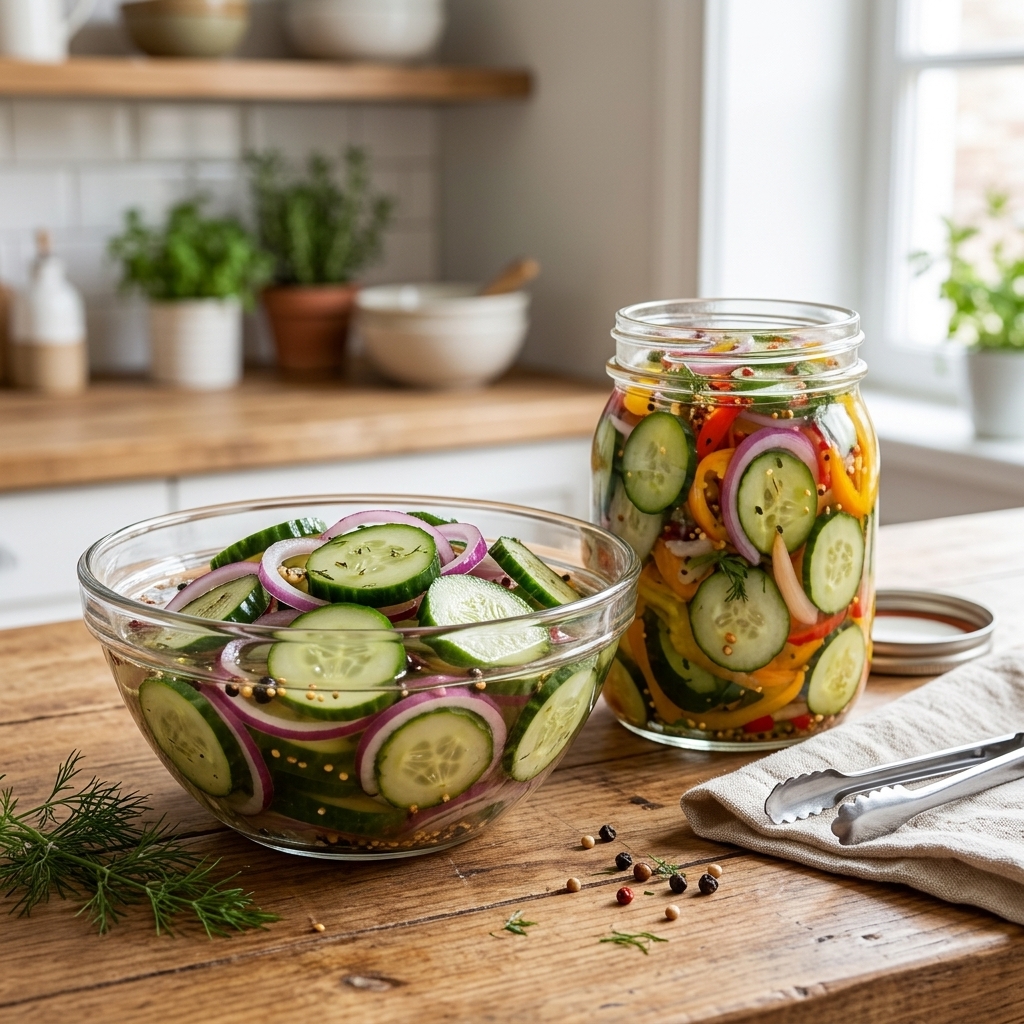
Anti-Inflammatory Pickled Cucumbers
These Anti-Inflammatory Pickled Cucumbers are a crisp, tangy, and flavorful refrigerator pickle made with fresh cucumbers, red onion, garlic, turmeric, ginger, apple cider vinegar, and aromatic spices.
8
servings30
minutes15
minutes28
kcal45
minutesIngredients
- For the Vegetables
2 large English cucumbers, or 4 Persian cucumbers
1 small red onion, thinly sliced
3 garlic cloves, lightly crushed
1 fresh red chili, thinly sliced (remove seeds if a milder flavor is preferred)
- For the Golden Pickling Brine
1 cup raw apple cider vinegar (with the mother)
1 cup filtered water
1 tablespoon sea salt
1 tablespoon honey or maple syrup (optional)
2 tablespoons freshly grated turmeric, or 2 teaspoons ground turmeric
1 tablespoon freshly grated ginger, or 1 teaspoon ground ginger
1 teaspoon whole black peppercorns
1 teaspoon fenugreek seeds
2 whole star anise pods
Directions
- Prepare the Cucumbers
Wash the cucumbers thoroughly under cold running water. Slice them into thin rounds or cut them into spears according to your preference. Sprinkle lightly with salt and allow them to rest for about 10 minutes to remove excess moisture. - Rinse and Dry
Rinse the salted cucumbers under cool water to remove excess salt. Drain well and pat completely dry using clean kitchen towels or paper towels. - Fill the Jar
Place the cucumber slices into a clean glass jar along with the sliced red onion, crushed garlic, and fresh chili. Arrange them evenly so the vegetables are well distributed throughout the jar. - Prepare the Brine
In a non-reactive saucepan, combine the apple cider vinegar, filtered water, sea salt, and optional honey or maple syrup. Add the fresh turmeric, ginger, black peppercorns, fenugreek seeds, and star anise. - Heat Gently
Warm the mixture over medium-low heat until it begins to steam. Do not allow it to boil. Stir occasionally until the salt dissolves completely, then remove the saucepan from the heat. - Pour Over the Vegetables
Carefully pour the warm brine into the jar, ensuring the cucumbers, onions, garlic, and chili are completely covered by the liquid. - Remove Air Bubbles
Use a clean spoon or chopstick to gently release any trapped air bubbles. If needed, press the vegetables lightly so they remain fully submerged beneath the brine. - Cool and Refrigerate
Allow the jar to cool to room temperature before sealing it with a tight-fitting lid. Refrigerate for at least 2 hours. For the richest flavor and best texture, allow the pickles to mature in the refrigerator for 24 to 48 hours before serving. - Serve
Enjoy the pickled cucumbers chilled as a healthy side dish, salad topping, sandwich filling, or accompaniment to grilled meats, seafood, rice bowls, wraps, and charcuterie boards.