Introduction
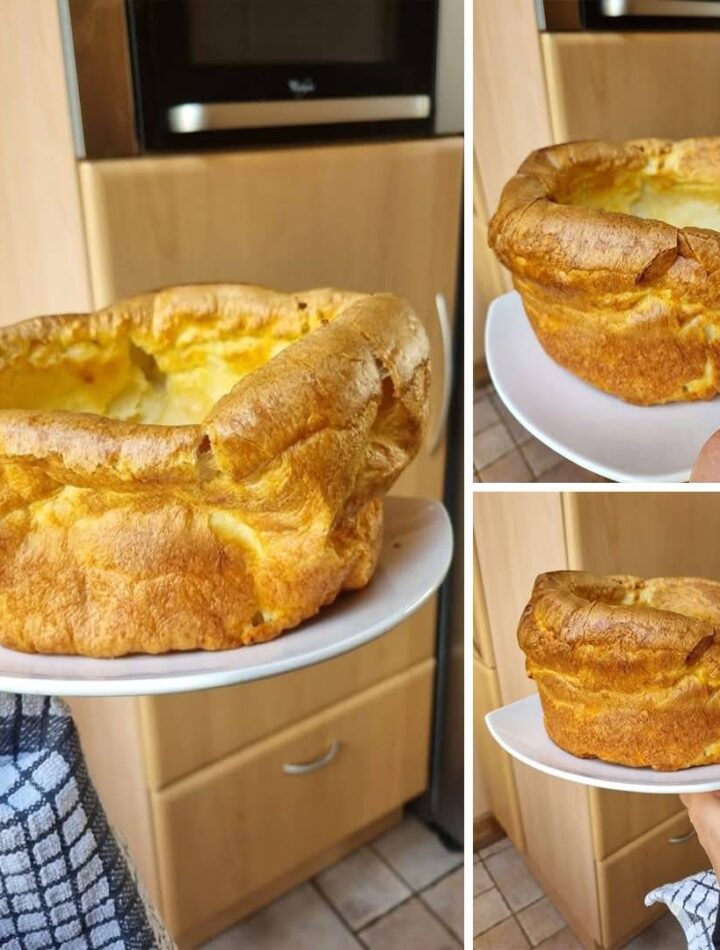
Yorkshire Pudding is a classic British dish made from a simple batter of eggs, flour, and milk, traditionally baked in hot beef drippings until it rises into light, airy, and crisp puffs with soft, slightly custardy centers. Despite the name, it is not a dessert; it is typically served alongside roast beef and gravy as part of a traditional Sunday roast.
The key to perfect Yorkshire puddings is:
- Very hot oven
- Well-rested batter
- Proper fat heating
- Quick baking without opening the oven
When done correctly, they puff dramatically and form crisp golden shells.
Ingredients
Basic Batter
- 140 grams all-purpose flour
- 4 large eggs
- 200 ml whole milk
- 1/2 teaspoon salt
- 1/2 teaspoon black pepper (optional)
For Baking Fat
- Beef drippings (traditional choice)
or - Vegetable oil
or - Sunflower oil
or - Lard
Use about 1–2 teaspoons per muffin cup or pudding tin section.
Equipment Needed
- Muffin tin or Yorkshire pudding tray
- Mixing bowl
- Whisk
- Jug (for pouring batter)
- Oven
- Measuring cups/spoons
Understanding Yorkshire Pudding
Yorkshire Pudding works due to steam expansion:
- High heat causes moisture in batter to rapidly turn into steam.
- Steam pushes batter upward.
- The outer layer crisps while the inside stays soft.
Key factors:
- Heat must be very high
- Fat must be smoking hot
- Batter must be rested
Step-by-Step Instructions
Step 1: Prepare the Batter
In a large mixing bowl:
- Add flour and salt.
- Make a well in the center.
- Crack in eggs.
- Whisk gradually, pulling flour into eggs.
- Slowly add milk while whisking continuously.
Mix until smooth and lump-free.
The batter should be:
- Thin like heavy cream
- Smooth and pourable
If too thick:
- Add a little milk.
If too thin:
- Add a small amount of flour.
Step 2: Rest the Batter
- Cover the batter.
- Let it rest at room temperature for at least 30 minutes.
- For best results, rest for 1–2 hours.
Resting improves:
- Texture
- Rise
- Flavor development
Some cooks rest it overnight in the refrigerator.
Step 3: Preheat the Oven
Preheat oven to:
- 220°C (425°F) or higher if your oven allows
Place the muffin tray inside the oven while it heats up.
This is important because:
- The tray must be extremely hot before adding batter.
Step 4: Heat the Fat
- Add about 1–2 teaspoons of oil or drippings into each muffin cup.
- Place tray back into oven.
- Heat until the fat is:
- Smoking slightly
- Very hot
This step is crucial for proper rising.
Do not skip or reduce heat.
Step 5: Pour the Batter
Carefully:
- Remove the hot tray from the oven.
- Quickly pour batter into each cup (about halfway full).
- Work fast to retain heat.
You may hear sizzling immediately—that is correct.
Do not overfill cups.
Step 6: Bake Without Disturbing
- Place tray back into oven immediately.
- Bake for 20–25 minutes.
Important rules:
- Do NOT open the oven door during baking.
- Do NOT shake the tray.
The puddings will:
- Rise rapidly
- Puff up dramatically
- Turn golden brown
Step 7: Final Browning
After 20–25 minutes:
- They should be tall, crisp, and golden.
- If needed, bake 2–5 minutes more for extra crispness.
Step 8: Remove and Serve
- Remove from oven.
- Take puddings out of tray immediately to prevent steaming.
- Serve hot.
They are best eaten fresh.
Texture and Flavor Profile
Exterior
- Crisp
- Golden brown
- Slightly chewy edges
Interior
- Soft
- Airy
- Hollow or custard-like center
Flavor
- Mild
- Slightly eggy
- Savory (especially with beef drippings)
Serving Suggestions
Yorkshire Puddings are traditionally served with:
- Roast beef
- Gravy
- Roast potatoes
- Vegetables
- Horseradish sauce
They can also be used in modern ways:
Mini Meal Version
- Fill with beef stew
- Add chicken and gravy
- Stuff with mushrooms and herbs
Breakfast Version
- Eggs
- Bacon
- Sausage
Dessert Twist (less traditional)
- Jam
- Cream
- Honey
Variations
1. Giant Yorkshire Pudding
- Use a large baking dish instead of muffin tin.
- Bake longer (30–40 minutes).
- Often served as a centerpiece.
2. Mini Yorkshire Puddings
- Use smaller molds.
- Perfect for appetizers or party snacks.
3. Herb Yorkshire Pudding
Add to batter:
- Thyme
- Rosemary
- Parsley
Gives extra aroma and depth.
4. Cheese Yorkshire Pudding
Add:
- Grated cheddar
- Parmesan
Creates richer, savory flavor.
5. Vegetarian Version
Replace beef drippings with:
- Vegetable oil
- Sunflower oil
Still rises well if oven heat is correct.
Tips for Best Results
1. Batter Must Rest
Resting improves elasticity and rise.
2. Oven Must Be Very Hot
Low heat = flat puddings.
3. Fat Must Be Smoking Hot
This is essential for puffing.
4. Do Not Open Oven Door
Heat loss causes collapse.
5. Serve Immediately
They deflate over time as steam escapes.
Common Mistakes to Avoid
1. Cold Tray
Preheating tray is critical.
2. Lumpy Batter
Whisk thoroughly for smooth consistency.
3. Too Much Batter
Overfilling prevents rising.
4. Wrong Fat Temperature
Not hot enough = dense puddings.
5. Overmixing After Rest
Deflates batter structure.
Storage Instructions
Refrigeration
- Store in airtight container for up to 2 days.
Freezing
- Freeze cooked puddings for up to 1 month.
Reheating Instructions
Oven Method (Best)
- 180°C (350°F) for 5–7 minutes
Air Fryer
- 3–5 minutes at medium heat
Microwave (Not Recommended)
- Makes them soft and chewy
Nutritional Overview (Approximate)
Per pudding:
- Calories: 90–140
- Protein: 3–5 grams
- Carbohydrates: 8–12 grams
- Fat: 5–8 grams
Values depend on fat used for baking.
Why Yorkshire Puddings Rise So Well
The science behind it:
- High heat converts water in batter into steam.
- Steam expands and lifts batter upward.
- Protein structure sets quickly in hot fat.
- This traps air and creates hollow centers.
Best Pairings
Yorkshire Pudding pairs best with:
- Roast beef and gravy
- Roast chicken
- Lamb dishes
- Mashed potatoes
- Steamed vegetables
It is a staple of the traditional British Sunday roast.