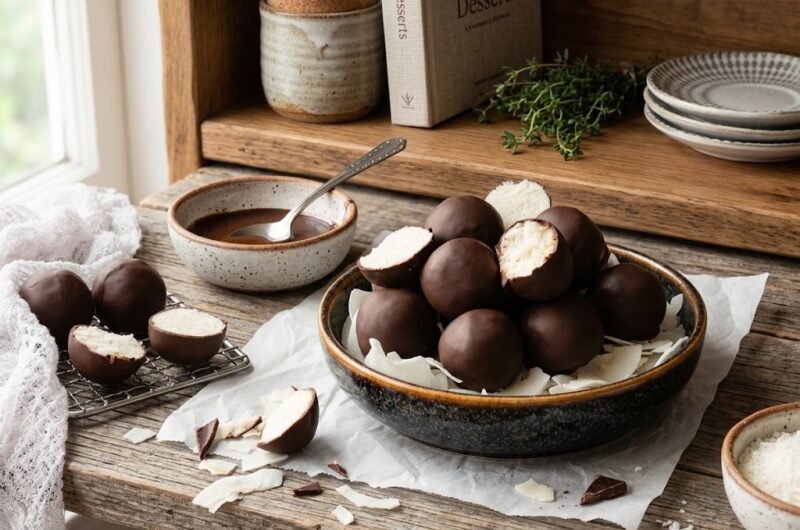
Keto chocolate coconut balls are a simple no-bake snack made with a soft, slightly chewy coconut center and a thin chocolate coating. They are a good choice when you want a homemade sweet treat without turning on the oven. The recipe combines coconut, coconut butter, erythritol, coconut milk, and extracts, then finishes each ball with melted sugar-free chocolate.
Why These No-Bake Coconut Balls Are Easy to Make
One of the main benefits of this recipe is its simple preparation method. The filling ingredients are processed together in one food processor, so there is no need to prepare several separate mixtures. Once the filling reaches a texture that can be rolled, the remaining steps are shaping, chilling, coating, and allowing the chocolate to set.
The ingredient list is also relatively short. The main filling uses raw coconut chips, coconut butter, erythritol, full-fat canned coconut milk, coconut extract, vanilla extract, and a small pinch of salt. The chocolate coating requires only sugar-free chocolate and coconut oil.
Most of the preparation involves hands-on shaping rather than cooking. The coconut mixture is divided into approximately ⅝-ounce portions, with each portion measuring about 1 packed tablespoon. Rolling the portions between your palms creates the round shape before the balls are transferred to the freezer to firm up.
The full preparation and chilling process takes about 50 minutes. The active prep time is 25 minutes, while chilling makes up the rest of the process. This makes the recipe convenient for preparing ahead when you need a homemade low carb snack for the refrigerator or freezer.
The Texture of the Coconut Filling
The texture of the filling depends largely on how well the ingredients are processed. The mixture should become fine enough to roll but should not be processed beyond the point where it loses all texture. The goal is a coconut mixture that starts to clump together when pressed.
Raw coconut chips create the main body of the filling. They provide a more noticeable coconut texture and should be processed with the other ingredients until the pieces become small enough to hold together. Coconut flakes can also be used as a substitution according to the original recipe information.
Shredded coconut may also work, but it has a finer texture than coconut chips and may require less processing time. If using a finer coconut product, check the mixture regularly while processing. The filling should still be able to form into a ball without falling apart.
The coconut butter and full-fat canned coconut milk help bind the ingredients. Together, they add moisture and richness so the processed coconut can be pressed into small portions. Chilling the rolled balls afterward makes them firmer and easier to coat with melted chocolate.
Choosing the Coconut Ingredients
Raw coconut chips are specified for the original recipe. They should not be toasted or baked before use because the recipe is designed around the flavor and texture of raw coconut. Coconut flakes are described as a suitable alternative and are generally similar, although they can be slightly finer.
Coconut butter, sometimes called coconut manna, is another important part of the filling. It is different from coconut oil because it contains the whole coconut flesh rather than only the extracted oil. Its thick texture helps the filling come together and adds a concentrated coconut taste.
Full-fat canned coconut milk is used in a small amount, but it plays an important role in helping the ingredients form a workable mixture. The original recipe calls for 1½ ounces, equal to 2 tablespoons plus 2½ teaspoons. Measure it carefully so the filling does not become too wet.
If a substitution is needed, the original information states that heavy cream can be used as an alternative, although that version would no longer be vegan. Water can also be used, though it may produce a less rich result. These alternatives can be considered when necessary without changing the main recipe below.
Sweetening the Keto Coconut Balls
Granulated erythritol is used to sweeten these keto chocolate coconut balls while keeping the recipe low in carbohydrates. Erythritol is a sugar alcohol commonly used in low carb recipes because it provides sweetness without the same carbohydrate contribution as regular granulated sugar.
The original recipe uses 2¼ ounces, or ⅓ cup, of granulated erythritol. Processing it with the coconut ingredients helps distribute the sweetness throughout the filling. This means each ball has a consistent flavor rather than having sweetener concentrated in certain areas.
Some people notice a cooling sensation when eating foods made with erythritol. This can depend on the product used and personal preference. Since the recipe combines erythritol with coconut, coconut extract, vanilla, and chocolate, the sweetener is part of a fuller flavor rather than the only noticeable taste.
For a non-keto version, regular granulated sugar can be used according to the original substitution information. However, using sugar will change the low carb nature of the recipe and the nutritional values. The main recipe below keeps erythritol as the original listed ingredient.
Coconut and Vanilla Flavor
Coconut extract strengthens the flavor of the filling and works alongside the raw coconut chips and coconut butter. One tablespoon is used, giving the small snack balls a clear coconut taste. The extract is blended into the mixture rather than added after processing, which helps spread the flavor evenly.
Vanilla extract is included in a smaller amount. The ½ teaspoon does not overpower the coconut but adds another layer of flavor to the filling. Coconut and vanilla work well together, especially when the finished balls are covered with dark chocolate.
A pinch of salt is also included. Even in a sweet recipe, a small amount of salt can help balance the flavors. It should be added with the remaining filling ingredients before processing so it is mixed evenly throughout the coconut mixture.
Because these flavorings are concentrated, the listed amounts are enough for the full batch of 15 balls. Keeping the original measurements helps maintain the intended balance between the coconut filling and the chocolate coating.
How to Make the Coconut Ball Filling
Start by placing the raw coconut chips, coconut butter, granulated erythritol, full-fat canned coconut milk, coconut extract, vanilla extract, and salt into a food processor. Use the steel blade attachment as specified in the original method.
Process the mixture until it becomes fine enough to roll and begins clumping together. Stop occasionally if needed and check the consistency. The mixture should hold together when pressed between your fingers rather than remaining completely loose and dry.
The amount of processing can vary depending on whether coconut chips, flakes, or another texture of coconut is used. Coconut chips may need more processing, while shredded coconut may reach the correct consistency sooner. Avoid relying only on a fixed processing time and check the texture instead.
Once the filling is ready, line a small cookie sheet or pan with parchment paper or foil. This prevents the shaped balls from sticking while they chill. Having the tray prepared before portioning makes the process faster and keeps the work area organized.
Rolling the Chocolate Coconut Balls
Divide the coconut mixture into ⅝-ounce portions, which are approximately 1 packed tablespoon each. Scoop one portion at a time and roll it between your palms until it forms a compact ball. Continue until all of the filling has been shaped.
The recipe makes approximately 15 balls. Keeping the portions close to the same size helps them chill and set at a similar rate. It also makes the nutritional information easier to understand because the original recipe is designed around the full yield.
Place each finished ball on the prepared parchment paper or foil-lined tray. Leave a small amount of space between them so they do not stick together. Once all the portions are shaped, transfer the tray to the freezer.
Freeze the coconut balls for about 10 to 15 minutes, or until they are firm. Chilling is important because it helps the soft coconut center stay intact when dipped into the warm melted chocolate. Very soft balls may break or lose their shape during coating.
Making the Chocolate Coating
The chocolate coating uses 3 ounces of chopped sugar-free chocolate and 1¼ teaspoons of coconut oil. Place both ingredients in a small microwave-safe mixing bowl. The coconut oil helps create a smoother melted mixture that is easier to use for dipping.
Heat the chocolate in 30-second increments, stirring between each heating period. Continue only until the chocolate and coconut oil have melted into a smooth mixture. Short heating intervals help reduce the chance of overheating the chocolate.
Stir thoroughly after each interval because chocolate can continue melting from its own retained heat. If small pieces remain after stirring, another short heating period may be enough. The coating should be smooth and fluid but not excessively hot.
The original recipe uses sugar-free chocolate to keep the snack keto-friendly and low carb. Unsweetened dark chocolate can also be used with powdered erythritol, while 60 to 70 percent dark chocolate is suggested for a non-keto variation. The main recipe remains unchanged and uses the original sugar-free chocolate.
Dipping Each Coconut Ball
Remove the chilled coconut balls from the freezer once they are firm enough to handle. Dip each ball individually into the melted chocolate. A fork or toothpick can be used to lower the ball into the coating and lift it out again.
Allow excess chocolate to drip away before placing the coated ball back onto the parchment paper or foil. Gently tapping the fork or toothpick against the side of the bowl can help remove extra coating without disturbing the coconut center.
Repeat the process with the remaining balls. Work carefully because the chilled centers will be firm but can still soften if handled for too long. If the chocolate begins to thicken before all the balls are coated, gently warm it again in a short microwave interval.
After dipping all the balls, transfer the tray to the refrigerator. Chill them until the chocolate has fully set, which takes about 10 minutes according to the original recipe. Once the coating is firm, the chocolate coconut balls are ready to serve.
Serving These Healthy Coconut Bites
These healthy coconut bites can be served directly from the refrigerator after the chocolate has set. Their small size makes them suitable for a quick snack when you want something sweet but do not want to prepare a larger dessert.
They can also be included on a snack plate with other foods that fit your preferred eating style. Because the recipe is keto-friendly, gluten-free, and vegan with the listed ingredients, it can work well for people looking for a homemade snack that avoids gluten and animal-based ingredients.
The chocolate shell becomes firm when chilled, while the coconut center stays slightly chewy. For the best texture, keep the balls chilled until serving. If left in a warm place for a long period, the coconut filling and chocolate coating may soften.
The recipe yields 15 balls, making it easy to prepare a batch and portion the snacks over time. Rather than making a sweet treat every day, you can prepare the full batch once and keep it properly stored for later.
Storage and Freezing
Store the finished chocolate coconut balls in an airtight container or zip-top bag. According to the original recipe information, they can be kept in the refrigerator for 2 to 3 weeks. Keeping them sealed helps protect their texture and prevents them from absorbing other refrigerator odors.
For longer storage, the balls can be frozen for up to 3 months. Use an airtight container or suitable freezer bag. If stacking the balls, placing parchment paper between layers can help keep the chocolate surfaces from sticking together.
When you want to eat frozen coconut balls, allow them to thaw as needed before serving. The exact thawing time can vary depending on the temperature and storage method. Keeping the container sealed while the balls thaw can help protect the chocolate coating.
The ability to refrigerate or freeze this recipe makes it useful for advance preparation. A batch of no-bake chocolate coconut balls can be made ahead and kept available for a sweet snack without repeating the full preparation process.
Ingredient Substitutions
Coconut chips can be replaced with coconut flakes if needed. Since flakes may be finer, watch the mixture as it processes and stop once it begins to clump. Shredded coconut may also work and may need less processing time because of its smaller texture.
The original information allows regular granulated sugar in place of erythritol for a non-keto version. This will change the carbohydrate content and means the recipe should no longer be described as a keto snack.
Full-fat canned coconut milk can be replaced with heavy cream or water. Heavy cream provides a richer texture but changes the vegan status of the recipe. Water is another possible option, although the finished filling may not have the same richness.
For the coating, unsweetened dark chocolate can be sweetened by adding 1½ tablespoons of powdered erythritol after melting. Another alternative is 60 to 70 percent dark chocolate for a non-keto variation. These options are useful when adjusting the recipe to available ingredients.
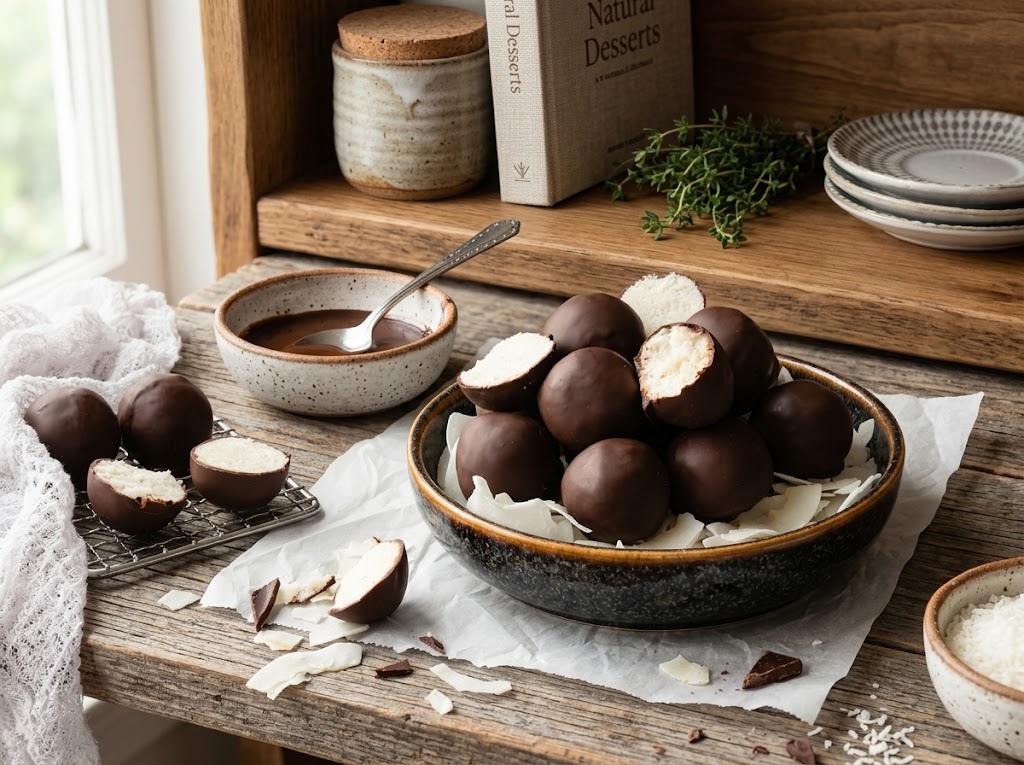
Keto Chocolate Coconut Balls
 Recipe by admin1
Keto chocolate coconut balls with a slightly chewy coconut center and a thin sugar-free chocolate coating. These keto-friendly, low carb, gluten-free, and vegan coconut bites are easy to prepare using a food processor and require no baking.
15
balls25
minutes25
minutes129
kcal50
minutesIngredients
- No-Bake Coconut Balls:
4½ ounces (2¼ cups, packed) raw coconut chips
2¼ ounces (¼ cup) coconut butter/manna
2¼ ounces (⅓ cup) granulated erythritol
1½ ounces (2 tablespoons plus 2½ teaspoons) full-fat canned coconut milk
1 tablespoon coconut extract
½ teaspoon vanilla extract
Pinch of salt
- Chocolate Coating:
3 ounces sugar-free chocolate, chopped
1¼ teaspoons coconut oil
Directions
- Add the raw coconut chips, coconut butter/manna, granulated erythritol, full-fat canned coconut milk, coconut extract, vanilla extract, and salt to a food processor fitted with a steel blade. Process until the mixture becomes fine and starts to clump together.
- Line a small cookie sheet or pan with parchment paper or foil. Divide the mixture into ⅝-ounce portions, about 1 packed tablespoon each, and roll each portion between your palms to form a ball.
- Place all the coconut balls on the prepared tray and transfer them to the freezer. Chill for about 10 to 15 minutes, or until the balls are firm enough for dipping.
- Combine the chopped sugar-free chocolate and coconut oil in a small microwave-safe bowl. Microwave in 30-second intervals, stirring between each interval, until the mixture is smooth.
- Using a fork or toothpick, dip each chilled coconut ball into the melted chocolate. Let the excess chocolate drip off, then place the ball back onto the parchment paper or foil. Repeat with all remaining balls.
- Transfer the coated balls to the refrigerator and chill for about 10 minutes, or until the chocolate has fully set. Serve chilled.
Nutrition Facts
- Calories: 129kcal
- Fat: 11.4g
- Carbohydrates: 5g
- Fiber: 3.2g
- Sugar: 0.7g
- Protein: 1.3g