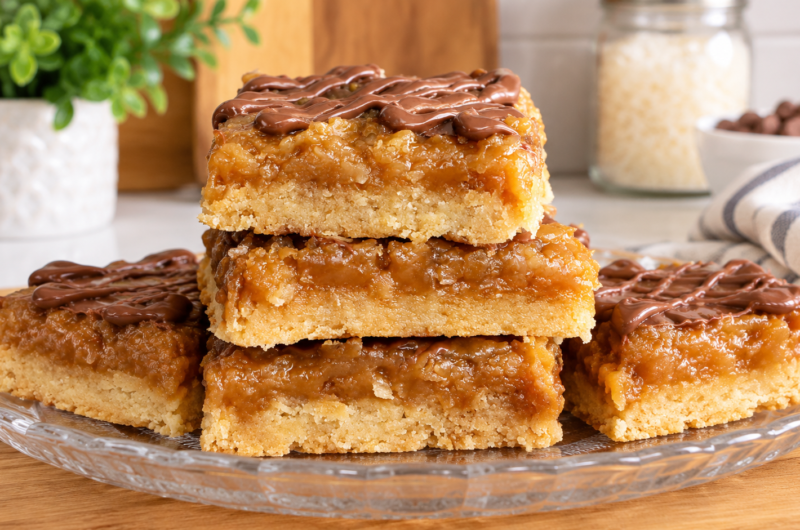
Caramel Coconut Chocolate Treats are rich, chewy dessert bars made with three irresistible layers: a buttery shortbread crust, a sweet caramel coconut filling, and a smooth milk chocolate drizzle. Inspired by the familiar flavors of Samoa-style cookies, these homemade caramel coconut bars combine toasted coconut flavor, buttery cookie texture, and creamy chocolate in every bite. They are an excellent choice for anyone who enjoys easy homemade desserts with a bakery-style appearance and a delicious balance of sweetness.
One of the best things about this caramel coconut chocolate bars recipe is that it delivers impressive results without complicated baking techniques. You do not need to prepare individual cookies, shape dozens of portions, or work with special equipment. Instead, the crust and filling are baked together in a single square pan, and the melted chocolate is drizzled over the cooled dessert. Once everything has set, you can cut the mixture into neat squares that are easy to serve, store, and share.
These bars are suitable for family gatherings, afternoon snacks, holiday dessert tables, potlucks, and homemade food gifts. Their combination of buttery shortbread, gooey caramel, shredded coconut, and milk chocolate makes them appealing to people who enjoy classic candy-inspired desserts. Although the finished bars look special enough for celebrations, the preparation is straightforward enough for an ordinary weekend baking session.
What Makes These Caramel Coconut Bars Special?
The appeal of caramel coconut bars comes from the contrast between their three layers. The shortbread base provides a firm but tender foundation, the caramel coconut mixture adds a soft and chewy center, and the chocolate topping brings a creamy finish. Each component contributes a different texture, so the finished dessert tastes more interesting than a simple cookie or brownie while remaining easy to prepare at home.
Another reason to love this recipe is its familiar flavor combination. Brown sugar creates a deep, molasses-like sweetness, butter adds richness, and honey contributes to the smooth caramel filling. Sweetened shredded coconut gives the center its distinctive tropical flavor, while milk chocolate provides a mellow cocoa taste. Together, these ingredients create a dessert that resembles a caramel coconut candy bar but has the satisfying texture of a freshly baked shortbread treat.
The recipe also offers convenient portioning. Instead of making individual cookies, you bake everything in an 8-by-8-inch pan and cut the cooled dessert into 16 servings. This makes the bars practical for sharing and helps keep preparation and cleanup manageable. You can cut them into smaller pieces for a dessert platter or serve full squares when you want a more substantial sweet treat.
Understanding the Three Delicious Layers
1. Buttery Shortbread Crust
The shortbread crust forms the foundation of these homemade caramel coconut bars. Butter, brown sugar, salt, and all-purpose flour combine to create a crumbly dough that becomes firm and tender when baked. Unlike a soft cake base, shortbread has a compact texture that supports the heavier caramel coconut topping without becoming overly delicate.
The butter is important because it provides both flavor and tenderness. Brown sugar adds sweetness and a subtle caramel note, while a small amount of salt balances the richness. When the ingredients are mixed properly, the dough should look crumbly but hold together when pressed between your fingertips. This is the right texture for pressing it into an even layer in the baking pan.
Baking the crust before adding the filling helps establish its structure. The initial baking period allows the flour mixture to set and develop a lightly golden surface. This step also helps prevent the bottom layer from becoming too soft beneath the moist caramel coconut mixture. Pressing the dough evenly into the pan is particularly important because an uneven crust can produce bars with inconsistent thickness.
2. Sweet and Gooey Caramel Coconut Filling
The middle layer gives these bars their signature flavor. Unsalted butter, brown sugar, honey, heavy cream, and salt are heated together to create a bubbling caramel mixture. Shredded coconut is added afterward, along with pure vanilla extract, producing a thick, sweet filling that spreads over the partially baked shortbread crust.
Brown sugar provides the caramel-like flavor, while butter and heavy cream contribute richness and a smooth mouthfeel. Honey adds another layer of sweetness and helps give the filling its sticky texture. Vanilla extract rounds out the flavor, making the coconut and caramel taste more balanced rather than simply sugary. The small amount of salt helps bring out these flavors and complements the chocolate topping.
The mixture needs to simmer briefly so the ingredients combine properly. Stirring occasionally helps distribute the heat and prevents the sugar mixture from sticking excessively to the saucepan. Once the caramel is bubbling throughout, the specified two-minute simmer gives it time to cook before the coconut is added. After spreading the filling over the crust, a second baking period helps the layers set together.
Sweetened shredded coconut is the key ingredient that makes these treats resemble Samoa-inspired desserts. Its texture adds a pleasant chewiness, while its sweetness works naturally with the brown sugar caramel. If you prefer a less stringy texture, you can roughly chop the shredded coconut before mixing it into the filling. This is optional, so you can leave the coconut as it comes from the package if you prefer longer strands.
3. Smooth Milk Chocolate Drizzle
The final layer is a generous drizzle of melted milk chocolate. Rather than covering the entire surface with a thick chocolate coating, the chocolate is applied in a zigzag pattern. This creates an attractive finish while allowing the golden caramel coconut layer to remain visible. It also gives each square a little chocolate in every bite without overwhelming the other ingredients.
Milk chocolate chips are convenient because they melt into a smooth topping when heated carefully. You can melt them in a double boiler or use a microwave, taking care to heat them slowly. Chocolate can become thick, grainy, or difficult to drizzle when overheated, so short heating intervals and gentle stirring are helpful when using a microwave.
Once melted, the chocolate can be transferred to a piping bag or a resealable zip-top bag. Snipping off a very small corner gives you better control over the drizzle. For cleaner portions, consider cutting the bars before adding the chocolate, as this makes it easier to separate the squares without breaking the decorative lines. A light sprinkle of flaky finishing salt is optional and adds a pleasant contrast to the sweet chocolate and caramel.
Ingredients You Need for This Recipe
Choosing the Right Ingredients
Each ingredient has a specific purpose in creating the right texture and flavor. For the crust, use softened unsalted butter so it combines easily with the brown sugar and flour. Spoon the flour into your measuring cup and level it off rather than packing it tightly, since too much flour can make the shortbread dry or difficult to press into the pan. Both light and dark brown sugar work well in this recipe.
For the filling, use heavy cream to give the caramel mixture its rich consistency. Honey is included as part of the original ingredient combination, so it should not be omitted or replaced if you want to follow the recipe as written. Sweetened shredded coconut supplies the chewy texture and sweetness needed for the caramel layer, while pure vanilla extract adds a warm aroma.
Milk chocolate chips are used for the topping, but the method of melting matters more than the equipment. A double boiler offers gentle heat, while a microwave is convenient when used carefully. Flaky finishing salt is optional and can be added according to your taste. Keeping the ingredients measured and ready before you begin makes the baking process smoother and helps prevent the caramel mixture from cooking longer than necessary.
How to Make Caramel Coconut Chocolate Treats
Step 1: Prepare the Baking Pan and Oven
Begin by preheating your oven to 350°F (177°C), positioning the rack in the center. Line an 8-by-8-inch metal baking pan with parchment paper or aluminum foil, then lightly grease the lining. This preparation helps prevent sticking and makes it easier to lift the cooled dessert from the pan. Leave a little extra lining extending over the sides if you want handles for removing the finished bars.
Step 2: Make the Shortbread Dough
Place the softened butter, brown sugar, salt, and all-purpose flour in a mixing bowl. Beat the ingredients with a hand mixer or a stand mixer fitted with a paddle attachment for several minutes, until the mixture becomes crumbly but combined. It should not resemble a smooth cake batter. Test the texture by squeezing a small amount between your fingertips; it should hold together when pressed.
Transfer the crumbly mixture into the prepared pan and distribute it evenly across the bottom. Use your fingers or the flat bottom of a measuring cup to press the mixture into a compact, level layer. Pay attention to the corners because thick spots can bake differently from thinner areas. Bake the crust for 15 minutes, then leave the oven on while you prepare the caramel coconut filling.
Step 3: Cook the Caramel Mixture
Add the butter pieces, brown sugar, honey, heavy cream, and salt to a medium saucepan. Place the saucepan over medium heat and cook, stirring occasionally, until the mixture begins to simmer and bubbles appear throughout. Once it reaches this stage, allow it to simmer for two minutes. Watch the pan carefully, since a hot sugar mixture can bubble vigorously.
Remove the saucepan from the heat and stir in the pure vanilla extract and shredded coconut. Mix until the coconut is distributed throughout the caramel and the ingredients form a cohesive filling. If you prefer smaller coconut pieces, roughly chop the shredded coconut before adding it. Allowing the mixture to combine evenly helps ensure that the finished bars have a consistent filling rather than sections with too much or too little coconut.
Step 4: Add the Filling and Bake Again
Carefully pour the caramel coconut mixture over the partially baked shortbread crust. Use a spatula to spread it into an even layer, reaching the corners without pressing too hard against the crust. Return the pan to the oven and bake for another 12 minutes. This second baking stage allows the filling to heat through and settle onto the shortbread base.
When the baking time is complete, remove the pan from the oven and place it on a wire rack. Let the dessert cool completely before adding the chocolate topping. The caramel layer will be soft while warm, so avoid trying to remove or cut the bars too early. Cooling also makes it easier to create neat portions and helps prevent the chocolate from melting immediately when it touches the surface.
Step 5: Melt and Drizzle the Chocolate
Place the milk chocolate chips in a heat-safe bowl. Melt them using a double boiler or microwave, applying gentle heat and stirring as needed. If using a microwave, heat the chocolate in short intervals, stirring between each one. Stop heating when the chips have mostly melted and use the residual warmth to smooth the mixture. Avoid introducing water into the chocolate, as even a small amount can cause it to seize.
Transfer the melted chocolate into a piping bag or a resealable zip-top bag. Snip a tiny piece from one corner and drizzle the chocolate over the cooled caramel coconut layer in a zigzag pattern. You can make fine lines for a delicate finish or slightly thicker lines for a more chocolate-rich bite. If desired, sprinkle a small amount of flaky finishing salt over the chocolate while it is still soft.
Step 6: Let the Chocolate Set and Slice
Allow the chocolate to firm up for a couple of hours before serving. If you want especially tidy squares, cut the bars before drizzling the chocolate, as this reduces the chance of the topping cracking during slicing. Alternatively, use a sharp knife to cut the fully set dessert into 16 squares. Wiping the blade between cuts can help keep the edges cleaner.
For the best eating experience, serve the bars at room temperature or slightly chilled. At room temperature, the caramel coconut center is softer and more gooey; when chilled, the butter and caramel become firmer. Both textures are enjoyable, so choose the serving temperature that suits your preference. Arrange the squares on a plate or dessert tray for an easy homemade treat that looks attractive without complicated decoration.
Frequently Asked Questions
Can I prepare caramel coconut chocolate bars in advance?
Yes. These bars are well suited to advance preparation because the chocolate needs time to set and the filling becomes easier to handle as it cools. You can bake the bars ahead of a gathering, let them cool completely, and store them in a covered container in the refrigerator. Cut them into squares before serving, or portion them ahead of time for a dessert platter.
Why does my caramel coconut filling seem soft?
The filling is meant to be chewy and slightly gooey rather than hard like brittle candy. It may feel especially soft while the bars are warm, so allow the full cooling period before judging the final texture. Refrigeration also firms the butter and caramel. Make sure you follow the specified simmering and baking times rather than removing the mixture from the heat too early.
Should I chop the shredded coconut?
Chopping the coconut is optional. Roughly chopping it produces shorter strands and can make the filling easier to bite through, especially if you dislike long, stringy pieces. Leaving the coconut unchopped is also perfectly suitable and preserves its familiar shredded texture. Either approach works with the original recipe.
Can I use dark chocolate instead of milk chocolate?
The supplied recipe uses milk chocolate chips, which provide a sweeter and creamier topping. Dark chocolate would create a less sweet, more cocoa-forward finish, but it would change the original ingredient list and flavor balance. For the recipe as written, use the specified milk chocolate chips.
How do I keep the chocolate drizzle attractive?
Wait until the caramel coconut layer is completely cool before adding the melted chocolate. Use a small piping-bag opening and move steadily across the surface to create consistent zigzag lines. Allow the chocolate to firm up before stacking or storing the bars. If presentation matters most, slice the dessert before adding the drizzle.
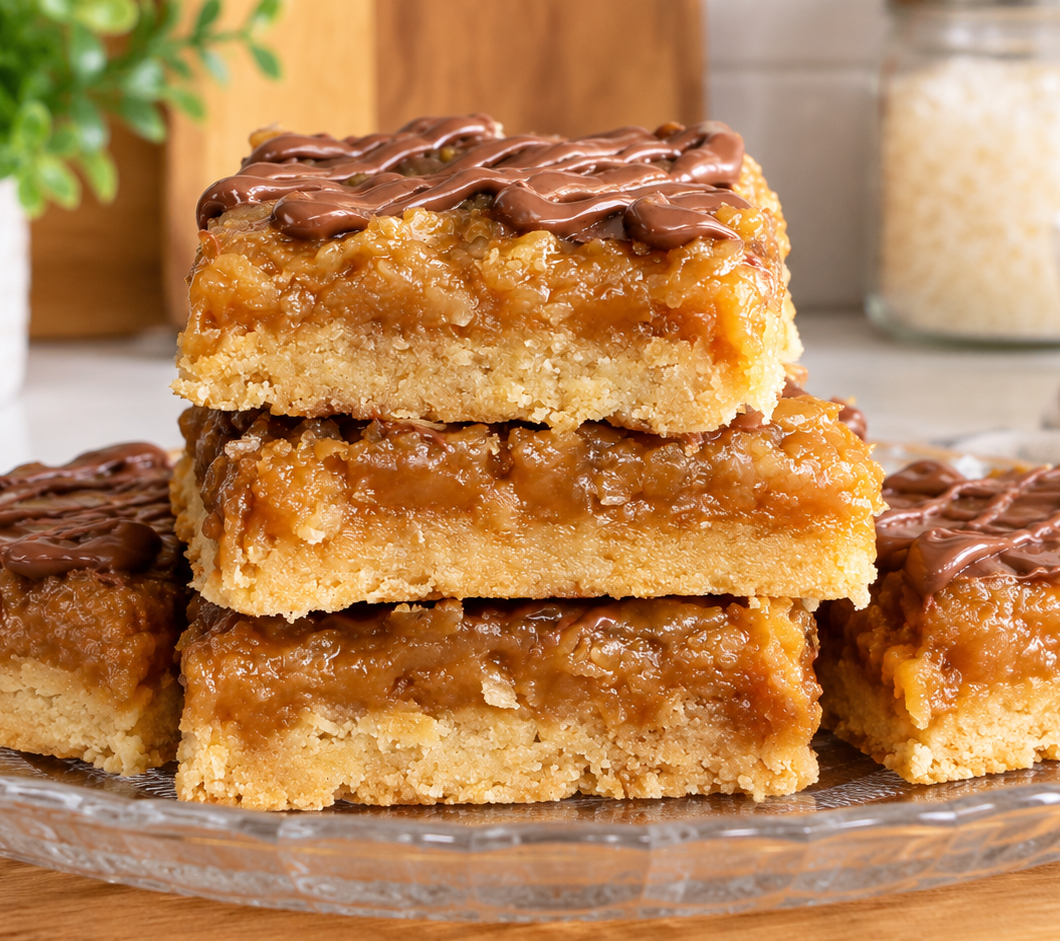
Caramel Coconut Chocolate Treat
 Recipe by admin1
These gooey caramel coconut chocolate bars feature a buttery shortbread crust, a sweet coconut caramel filling, and a decorative milk chocolate drizzle. A delicious homemade dessert inspired by Samoa-style cookies.
16
servings25
minutes27
minutes279
kcal52
minutesIngredients
- For the shortbread crust
½ cup (115 g) unsalted butter, softened
⅓ cup (70 g) light or dark brown sugar
¼ teaspoon salt
1¼ cups (157 g) all-purpose flour, spooned and leveled
- For the caramel coconut filling
6 tablespoons (86 g) unsalted butter, cut into pieces
¾ cup (156 g) light or dark brown sugar
2 tablespoons honey
¼ cup (60 g) heavy cream
Scant ½ teaspoon salt
1¼ cups (105 g) sweetened shredded coconut
½ teaspoon pure vanilla extract
- For the chocolate topping
¾ cup (125 g) milk chocolate chips
Flaky finishing salt, optional
Directions
- Preheat the oven to 350°F (177°C), with a rack positioned in the center. Line an 8-by-8-inch metal baking pan with foil or parchment paper and lightly grease it.
- Beat the softened butter, brown sugar, salt, and flour with a hand mixer or stand mixer until the mixture is crumbly but holds together when pressed. Transfer it to the prepared pan and press into an even layer. Bake for 15 minutes.
- Combine the butter, brown sugar, honey, heavy cream, and salt in a medium saucepan over medium heat. Stir occasionally until the mixture simmers with bubbles throughout. Simmer for two minutes, then remove from the heat.
- Stir the vanilla extract and shredded coconut into the caramel mixture. Pour the filling over the partially baked crust and spread it evenly. Return the pan to the oven and bake for another 12 minutes.
- Remove the pan from the oven and place it on a wire rack. Allow the dessert to cool completely before adding the chocolate topping.
- Melt the milk chocolate chips slowly in a double boiler or microwave, stirring as needed until smooth. Avoid overheating the chocolate.
- Transfer the melted chocolate to a piping bag or zip-top bag. Snip a small corner and drizzle the chocolate over the bars in a zigzag pattern. Add flaky finishing salt if desired.
- Allow the chocolate to firm up for a couple of hours. Cut into 16 squares and serve at room temperature or slightly chilled.
Notes
- Roughly chop the shredded coconut before mixing it into the filling if you prefer shorter strands. This step is optional.
- Allow sufficient time for the chocolate to firm up before stacking or storing the bars.
- For easier cutting, slice the cooled bars before applying the chocolate drizzle.
- Refrigerate in a covered container for up to 3 days.
- Store in a freezer-safe container for up to 3 months, separating layers with parchment paper.
- Room-temperature bars have a softer caramel center, while chilled bars are firmer.
Nutrition Facts
- Total number of serves: 1
- Calories: 279kcal
- Fat: 16g
- Carbohydrates: 33g
- Fiber: 1g
- Sugar: 25g
- Protein: 1g